Support our educational content for free when you purchase through links on our site. Learn more
🌱 Sustainable Tea Farming: 10 Practices That Shape Flavor


Sustainable tea farm practices impacting flavor quality can influence how tea develops—but they don’t guarantee a better cup. Healthy soil, thoughtful shade, biodiversity, careful harvesting, and skilled processing may help bring out a tea’s distinctive character; cultivar, climate, freshness, and brewing matter too.
We’ve tasted teas whose farm stories seemed to promise a whole garden in the cup, only to find the real magic came from the tea maker’s precise processing. And one fascinating twist: tea leafhoppers can trigger plant compounds associated with floral and honey-like aromas, even as heavy feeding can damage the crop. The flavor story, as ever, has a plot twist. 🫖
Key Takeaways
- Sustainable farming can support flavor potential, but taste depends on the entire journey from growing conditions to brewing.
- Soil health, shade, biodiversity, water management, and selective harvesting can affect plant growth and leaf quality.
- Organic, sustainable, and better-tasting are not interchangeable claims. Look for specific practices and credible evidence.
- Processing and storage matter as much as farming: skilled tea makers preserve or shape the character of the leaves.
- Ask how a tea was grown, then taste it for yourself. Sustainability and flavor are related questions, not the same one.
Table of Contents
- ⚡️ Quick Tips and Facts: How Sustainable Tea Farming Shapes Flavor
- 🌱 From Soil to Sip: The Story of Sustainable Tea Farming
- 🍃 What Makes a Tea Farm Sustainable?
- Environmental, Social, and Economic Standards
- Common Certifications and What They Tell You
- 🌿 Farm Practices That Influence Tea Flavor
- Soil Health, Compost, and Nutrient Management
- Shade Trees, Sunlight, and Tea-Growing Microclimates
- Biodiversity, Agroforestry, and Pest Control
- Water Conservation and Irrigation
- Organic Farming and Responsible Fertilizer Use
- Pruning, Plucking, and Harvest Timing
- 👅 How Sustainable Practices Change Tea’s Taste and Aroma
- Flavor Compounds, Teroir, and Leaf Chemistry
- Why Sustainable Tea Can Taste Sweter, Brighter, or More Complex
- When Farming Choices Don’t Improve Flavor
- 🫖 From Leaf to Cup: Processing and Sustainable Quality
- Withering, Rolling, Oxidation, and Firing
- Energy Use, Packaging, and Freshness
- ⛰️ Teroir and Sustainable Tea Regions
- Altitude, Climate, Soil, and Seasonal Variation
- How Growing Regions Create Distinctive Tea Profiles
- 👩 🌾 People Behind the Cup: Fair Labor and Tea Quality
- Wages, Worker Safety, and Community Well-Being
- Smallholders, Cooperatives, and Local Knowledge
- 📋 How to Evaluate a Sustainable Tea Farm
- Questions to Ask Tea Brands and Producers
- Reading Labels Without Falling for Greenwashing
- A Practical Tea Sustainability Checklist
- 🧪 How We Taste and Compare Sustainably Grown Tea
- A Simple Side-by-Side Tasting Method
- Brewing Tips for Getting the Best Flavor
- 🔎 Challenges, Trade-Offs, and the Future of Sustainable Tea
- Climate Change, Pests, and Crop Resilience
- Yield, Cost, and Quality Trade-Offs
- Regenerative Agriculture and the Next Generation of Tea Farms
- ✅ 10 Sustainable Tea-Farming Practices That Can Improve Flavor
- Conclusion
- Recommended Links
- FAQ
- Reference Links
⚡️ Quick Tips and Facts: How Sustainable Tea Farming Shapes Flavor
- Sustainable farming can influence flavor, but it doesn’t guarantee a better-tasting cup. Cultivar, terroir, harvest timing, processing, storage, and brewing all matter. For a broader guide to personal taste, see our take on what makes the world’s best-tasting tea.
- Healthy soil, thoughtful shade, biodiversity, and careful plucking can support distinctive leaf quality while helping farms conserve natural resources.
- Organic and sustainable aren’t synonyms. Organic certification addresses specified production standards; sustainability also includes issues such as water, biodiversity, worker conditions, and long-term farm viability. The USDA explains organic certification.
- Pests aren’t always flavor villains. Research on the tea green leafhopper (Empoasca onukii) describes how controlled feeding can trigger compounds associated with floral, fruity, and honey-like aromas. Too much feeding, however, can damage plants and reduce yields (research review).
- Careful processing still has the final say. A well-grown leaf can be duled by careless oxidation, firing, or storage; skilled tea makers turn agricultural potential into a memorable cup.
- ✅ Look for specific, verifiable farm practices, not just vague “eco-friendly” language.
- ❌ Don’t assume “organic,” “shade-grown,” “hand-picked,” or “single-origin” automatically means superior flavor.
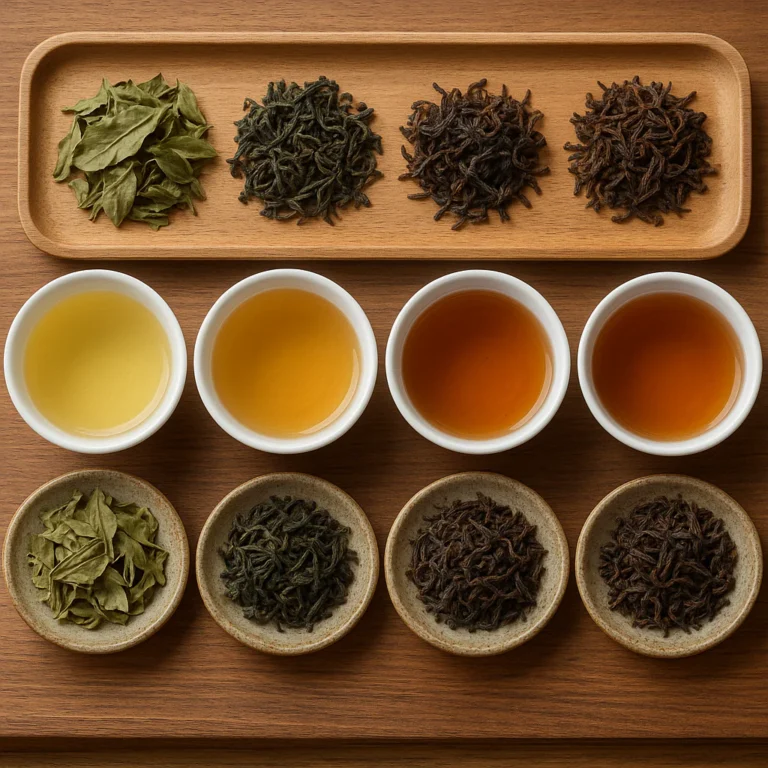
- 🫖 For a fair comparison, brew teas side by side using the same water, leaf-to-water ratio, temperature, and steep time.
| At a glance | What it may mean for flavor | What else to consider |
|---|---|---|
| Compost and cover crops | May support steady plant growth and soil life | Results depend on soil, climate, and management |
| Shade or agroforestry | Can alter leaf growth and chemical composition | Effects vary by cultivar and tea style |
| Integrated pest management (IPM) | Can reduce unnecessary pesticide use while managing crop damage | Pest pressure must still be monitored |
| Hand-plucking | Allows selective harvesting of buds and leaves | It is labor-intensive and not necessary for every tea |
| Fair labor practices | Can support skilled harvesting and careful handling | Social sustainability and taste are related, but not identical |
| Loose-leaf, protective packaging | Helps preserve whole-leaf character and freshness | Packaging alone cannot rescue stale tea |
🌱 From Soil to Sip: The Story of Sustainable Tea Farming
Tea flavor begins long before a kettle whistles. It starts with the Camellia sinensis plant, the living soil beneath it, the weather above it, and the choices growers make season after season. Farming decisions affect how leaves grow and which compounds they develop; processing then reshapes those compounds into the aroma and taste we recognize as green, white, olong, or black tea.
At Tea Brands™, we’ve learned to treat sustainability as a chain of connected choices, not a flavor sticker. Soil management can affect plant vigor. Shade can change growing conditions. Harvesting determines which leaves reach the factory. Processing and storage determine how much of their character survives. A claim about one farm practice is useful, but it is only one piece of the cup.
That distinction matters when tasting. A sustainable farm might produce tea with brilliant floral lift, deep sweetness, or pleasing briskness. It might also produce a tea whose most appealing feature is its clean, straightforward character rather than complexity. Flavor quality is not a moral scorecard: sustainable practices can create favorable conditions for quality, but skill and context still decide the result.
For more producer stories and sourcing perspectives, browse our Tea Brand Spotlights and Tea Brand Guides.
🍃 What Makes a Tea Farm Sustainable?
A sustainable tea farm aims to produce tea while caring for the resources and people that make future harvests possible. That usually means considering environmental health, workers’ livelihoods, and economic resilience together. The Food and Agriculture Organization of the United Nations (FAO) frames sustainable agriculture around interconnected social, environmental, and economic goals.
The word sustainable is broad, so look for evidence. Does a producer explain how it manages soil, water, pests, and habitat? Can it say where the tea is grown and who processes it? Are labor commitments described clearly? A trustworthy answer is usually more useful than a leaf-shaped logo and a cloud of green adjectives. 🌿
Environmental, Social, and Economic Standards
| Sustainability dimension | Examples of farm or supply-chain practices | Possible connection to tea quality |
|---|---|---|
| Environmental | Soil cover, composting, habitat protection, water conservation, reduced unnecessary pesticide use | May support healthy plants and preserve growing conditions; effects on flavor are site-specific |
| Social | Worker safety, fair employment practices, training, stable local jobs, community engagement | Skilled and experienced workers can help with selective harvesting and careful handling |
| Economic | Fair returns for growers, investment in processing, long-term buyer relationships, crop diversification | Financial resilience can help farms maintain quality-focused methods instead of chasing volume alone |
These dimensions may reinforce each other, but they can also involve trade-offs. Hand-plucking may support selective harvest and local employment, yet it takes more labor than mechanical harvesting. Reduced pesticide use can benefit ecological goals, but a farm still needs an effective plan to protect crops. A credible sustainability claim explains both the benefit and the challenge.
Common Certifications and What They Tell You
Certifications can provide useful standards and independent checks, but their scope differs. No single label tells you everything about flavor, worker conditions, biodiversity, or processing skill.
| Label or framework | What it generally addresses | What it does not automatically prove |
|---|---|---|
| USDA Organic | Compliance with applicable U.S. organic production and handling requirements; see the USDA Organic program | That the tea will taste better, or that every social and environmental issue is covered |
| EU Organic | Organic production requirements within the European Union; see the European Commission’s organic rules | A particular flavor profile or a complete sustainability assessment |
| Fairtrade | Standards and terms intended to support producers and workers in certified supply chains; consult Fairtrade International | That the tea is organic or has a specific sensory quality |
| Rainforest Alliance | Sustainability requirements and assurance for participating farms and supply chains; see the Rainforest Alliance certification overview | A guarantee of a particular farming method or superior taste |
| Producer-specific claims | May describe practices such as shade management, hand-harvesting, or water conservation | Independent verification, unless the producer explains its evidence or verification process |
Our buying tip: treat certification as a helpful starting point, then read the producer’s details. A farm with a transparent explanation of its practices may tell you more than a bare logo. For brand and sourcing explainers, browse our Tea Brand Guides.
🌿 Farm Practices That Influence Tea Flavor
A tea plant responds to its surroundings. The same cultivar can taste different when grown in another soil, under another canopy, or in another season. Yet the response is not a simple “more shade equals more sweetness” formula. The outcome depends on interactions among genetics, climate, farm management, harvest standards, and tea-making.
| Practice | Intended farm benefit | Potential flavor connection | Main caution |
|---|---|---|---|
| Compost and soil cover | Support soil structure and reduce erosion | May help sustain steady leaf growth | Compost quality and nutrient balance matter |
| Shade trees and agroforestry | Provide habitat and moderate exposure | Can influence leaf chemistry and growing pace | Too much shade may reduce productivity or change desired style |
| IPM and habitat for beneficial insects | Manage pests with a mix of tools | May reduce reliance on broad pesticide use; some insects can trigger flavor responses | Pest populations still need monitoring |
| Water conservation | Protect a limited resource and reduce stress | Healthy plants may develop more consistently | Water needs vary by soil, weather, and site |
| Selective plucking | Harvest suitable shoots for a chosen style | Can improve consistency in leaf size and maturity | Requires labor and skilled standards |
| Reduced unnecessary inputs | Limit potential environmental harm | May encourage slower, site-adapted growth in some systems | “Natural” does not mean risk-free or automatically flavorful |
Soil Health, Compost, and Nutrient Management
Soil is not just a platform holding up tea bushes; it is part of the farm’s working ecosystem. Soil texture, organic matter, drainage, acidity, and nutrient availability all influence plant growth. Compost, retained plant material, and cover crops can be part of soil stewardship, while soil testing helps growers avoid guessing at nutrient needs.
Tea is often grown in acidic soils, but the appropriate conditions depend on the site and cultivar. The FAO’s tea cultivation guidance describes tea’s production requirements and the importance of matching cultivation to local conditions.
From a tasting perspective, we avoid declaring “composted tea tastes sweeter” as a rule. Soil care can support the conditions for balanced growth; it does not create a flavor note on command. Nutrient levels, rainfall, altitude, leaf maturity, and processing also contribute. Too much nitrogen, for example, can make tender growth more attractive to some pests, while nutrient shortages can weaken plant health.
A practical soil-management approach may include:
- Test the soil for relevant characteristics before adding amendments.
- Maintain ground cover where appropriate to protect soil from erosion and intense rain.
- Use compost or other amendments thoughtfully, with attention to quality and nutrient balance.
- Monitor plant vigor and leaf condition instead of relying on a one-size-fits-all recipe.
- Adjust practices to local conditions, because a method suited to one estate may not suit another.
Shade Trees, Sunlight, and Tea-Growing Microclimates
Shade trees can create a different growing environment by changing the amount and timing of sunlight, moderating temperature, and contributing habitat. Shade-grown tea can therefore differ from tea grown in full sun, but “shade-grown” is not a single standardized flavor profile. The strength, duration, season, and type of shade matter, as do the cultivar and the tea style.
Japanese tencha, the leaf material used to make matcha, is commonly shade-grown before harvest, while many other green, black, and olong teas are grown under varying light conditions. The Japan Tea Central Public Interest Incorporated Association provides background on Japanese tea and its production traditions.
Shade can also shape pest behavior. A review of the tea green leafhopper notes that the insect tends to favor well-lit conditions, so increasing shade may reduce activity in some contexts. But growers making teas that rely on controlled leafhopper feeding may not want to suppress that activity completely (review of Empoasca onukii and tea).
That is a useful reminder: the same practice can help one farm goal and complicate another. Shade may benefit habitat or reduce heat stress, while limiting sunlight can also affect yields or the flavor target. Good growers choose shade levels for their site and purpose, not because a label sounds delicious.
Biodiversity, Agroforestry, and Pest Control
A farm with varied plants and habitat may support more ecological relationships than a uniform monoculture. Trees, hedgerows, ground cover, and carefully selected intercrops can provide shelter or food for beneficial organisms and help diversify a farm’s landscape. Those benefits are not instant pest erasers, but they can contribute to a broader management strategy.
Tea growers often use integrated pest management (IPM), which combines monitoring with suitable cultural, biological, and—when needed—selective control measures. The goal is to manage pests while reducing avoidable harm, not to leave a crop unprotected. The FAO’s IPM overview explains the approach.
One striking example is Empoasca onukii, the tea green leafhopper. The research review describes how feeding can trigger protective plant responses and compounds associated with floral, fruity, and sweet aromas. It reports that this insect is “both a pest and a quality enhancer,” depending on the degree of feeding and the farm’s production goals (scientific review).
That doesn’t mean a grower should invite an uncontrolled outbreak. Heavy feeding can damage leaves, reduce photosynthesis, and harm yield. Instead, the practical lesson is manage populations with the desired tea style, crop health, and local ecology in mind. Beneficial predators such as spiders, lady beetles, and parasitic wasps can be part of the broader picture, while monitoring helps growers spot when intervention is needed.
Water Conservation and Irrigation
Water affects plant health, crop resilience, and the farm’s footprint. Responsible water management can include maintaining soil cover, improving drainage, using irrigation efficiently where needed, and adjusting practices to rainfall and drought risk. A tea bush under water stress may not produce the same growth as a well-managed plant, but “more water” is not automatically better: waterlogging and poor drainage create different problems.
The FAO’s water and agriculture resources discuss the importance of managing water in agricultural systems. For tea farms, the right approach depends on rainfall patterns, slope, soil, and the age and condition of the bushes.
For flavor, the link is indirect. Water management supports growing conditions; it is not a seasoning. When plants stay healthy through variable weather, growers may have a more dependable harvest. But regional climate and leaf processing still play a large role in what ends up in your cup.
Organic Farming and Responsible Fertilizer Use
Organic farming restricts certain inputs under the applicable certification rules, but the term doesn’t tell us exactly how a farm manages soil or pests. A certified organic producer might use compost and biological pest controls; another farm may use different permitted methods. The details matter, and certification requirements depend on the market and standard.
Responsible fertilizer management matters in conventional and organic systems alike. Growers aim to provide adequate nutrition without applying more than plants and soils need. The tea green leafhopper review notes that high nitrogen can make tender leaves more attractive to the insect, and that reducing nitrogen input may lower leafhopper density (review). That is a specific finding about a pest relationship, not proof that low-input tea always tastes better.
The Red Blossom Tea Company argues that growing tea slowly and prioritizing quality over quantity can give plants more time to develop complexity, while excessive growth pressure may compromise flavor potential (its sustainability discussion). That is a useful producer perspective, but it should be read as a general philosophy rather than a universal scientific rule. The best evidence is a combination of transparent farm practices and the tea itself, tasted carefully.
Pruning, Plucking, and Harvest Timing
Pruning helps tea bushes maintain a manageable shape and encourages new growth, while plucking determines which parts of the plant become tea. A selective harvest may choose a bud and one or two leaves, or a different standard suited to the tea style. Harvesting too early, too late, or without consistency can change the leaf’s maturity and the final cup.
Hand-plucking can give workers more control over the selection of shoots than indiscriminate cutting, especially for teas where leaf appearance and uniformity are important. Red Blossom Tea Company emphasizes the role of skilled plucking and whole leaves in high-quality tea (producer perspective). However, machine harvesting can be practical for large-scale production and particular tea styles. Hand-picked is a method, not an automatic flavor certificate.
Pruning and harvest management may also influence pest pressure. The leafhopper review reports that pruning can remove tender shoots and egg-laying sites, potentially reducing populations. That may be useful where crop protection is the priority, but it could be counterproductive on a farm seeking carefully controlled leafhopper-influenced tea. Again, context is the whole story.
👅 How Sustainable Practices Change Tea’s Taste and Aroma
Sustainable practices influence flavor by changing the conditions in which leaves grow and the way they are harvested and processed. These effects are usually indirect and overlapping. A tea’s sweetness, briskness, bitterness, floral aroma, and texture can’t be credited to a single farming decision without evidence.
In our tastings, we start with the tea in the cup, then consider the farm story. That order keeps us honest: we taste the evidence first, then use sourcing details to understand the context. Our specialty tea coverage explores how distinctive ingredients and production choices can shape what you taste.
Flavor Compounds, Teroir, and Leaf Chemistry
Tea leaves contain many compounds that contribute to aroma, taste, and mouthfeel. Catechins and other polyphenols contribute to bitterness and astringency; amino acids such as theanine are associated with umami and savory impressions; volatile compounds contribute much of tea’s aroma. The balance changes with cultivar, growing conditions, harvest maturity, and processing.
Teroir refers to the combined influence of place and growing conditions, including climate, soil, elevation, and local cultivation. It’s a helpful idea, but it isn’t magic dust. Two farms in the same region can produce very different teas because they use different cultivars, plucking standards, and processing methods.
The leafhopper review describes changes in volatile compounds including linalool, geraniol, hotrienol, and methyl salicylate, which are associated with floral, fruity, minty, and sweet aromatic impressions. It also discusses changes in theanine and polyphenols, while stressing that effects vary with insect density, cultivar, environment, and processing (scientific review). A research finding about leaf chemistry is not a promise that every tea exposed to insects will taste like honey.
| Factor | Possible sensory influence | Why results vary |
|---|---|---|
| Cultivar | Shapes a tea’s underlying aroma and flavor potential | Cultivars differ in leaf chemistry and growth |
| Altitude and temperature | Can influence growth rate and seasonal development | Local weather and farm practices vary |
| Shade and light | May affect growth conditions and leaf chemistry | Shade intensity, duration, and style differ |
| Pest interaction | May trigger defensive compounds and aroma changes | Species, population, and damage level matter |
| Harvest maturity | Changes the balance of tenderness, strength, and astringency | Plucking standard and season matter |
| Processing | Defines oxidation, aroma development, and texture | Tea-maker skill and equipment make a major difference |
Why Sustainable Tea Can Taste Sweter, Brighter, or More Complex
Some farming choices may create conditions that support careful, quality-focused production. A farm that invests in soil health, harvests selectively, and processes tea in small batches may be able to preserve distinctive leaf character. That can translate into a cup with clearer aroma, more defined texture, or a longer finish—but it’s not guaranteed.
The Red Blossom Tea Company makes the case that small producers who prioritize quality over quantity can protect whole-leaf character and terroir (What Makes Tea Sustainable?). That perspective aligns with an important tasting principle: the way a leaf is handled can preserve or erase the qualities it developed on the plant.
You may notice flavor differences such as:
- More pronounced aroma: floral, grassy, fruity, roasted, or honeyed notes may be easier to distinguish in well-made tea.
- Cleaner texture: careful processing and storage can help avoid stale, harsh, or muddled impressions.
- More balanced astringency: leaf maturity, cultivar, processing, and brewing all contribute to how drying or brisk a tea feels.
- Distinctive seasonal character: a first flush or other seasonal harvest may taste different from later growth, even from the same farm.
These are sensory possibilities, not sustainability guarantees. If a producer describes a specific farm practice, we recommend asking how it relates to the tea you’re tasting. The answer may be more nuanced than “good for the planet, good for flavor”—and that nuance is often where the interesting part begins.
When Farming Choices Don’t Improve Flavor
A practice can be environmentally valuable without making a tea taste better to every drinker. Shade planting may support habitat but not suit a tea style that calls for strong sunlight. Hand-harvesting can protect leaf selection, but a poorly processed hand-picked tea can still disappoint. Organic certification is a production standard, not a sensory grade.
Flavor can also suffer from factors that happen after harvest:
- Leaves left too long before processing can lose freshness.
- Uneven withering or oxidation can create inconsistent flavors.
- Overheating during firing can flatten aroma or introduce unwanted notes.
- Moisture, heat, light, and oxygen can degrade tea during storage.
- Brewing with very hot water or steeping too long can exaggerate bitterness and astringency.
This is why we keep sustainability and taste as related but separate questions. Ask both: “How was this tea produced?” and “Do I enjoy drinking it?” You don’t need to choose between ethical curiosity and a happy palate.
🫖 From Leaf to Cup: Processing and Sustainable Quality
Once tea leaves are plucked, they begin changing. Processing methods—such as withering, rolling, oxidation, fixation, drying, and roasting—shape the finished style. “Fermentation” is sometimes used informally to describe oxidation in black tea, but oxidation is the more precise term for that process.
Processing can amplify a leaf’s character or obscure it. That means a farm’s sustainability story and a tea maker’s craft belong in the same conversation. A field can grow beautiful leaves, but the factory still has to make the right decisions.
Withering, Rolling, Oxidation, and Firing
Tea processing differs by style, but a simplified overview helps explain why farming alone cannot predict flavor.
- Harvest: Workers or machines gather shoots to a chosen standard.
- Withering: Leaves lose moisture and soften, preparing them for further shaping.
- Rolling or shaping: Leaves are bruised, rolled, twisted, or shaped to suit the tea.
- Oxidation or fixation: Black and many olong teas are oxidized to varying degrees; green tea is generally heated early to limit oxidation.
- Firing and drying: Heat helps set the desired character and reduce moisture.
- Sorting and packing: Finished tea is graded, stored, and prepared for shipping.
The exact sequence depends on tea style and maker. Green tea often uses heat early to limit oxidation, while black tea is intentionally oxidized. The Tea Association of the USA’s tea education resources offer a useful introduction to tea types and production.
| Processing stage | Quality opportunity | Potential drawback if poorly controlled |
|---|---|---|
| Harvest and leaf handling | Preserve suitable, intact leaf | Bruising or delays may create unwanted changes |
| Withering | Develop softness and prepare leaves for shaping | Uneven withering can lead to uneven processing |
| Rolling or shaping | Build appearance and influence leaf disruption | Excessive or inconsistent handling may affect uniformity |
| Oxidation or fixation | Create the target tea style | Incorrect timing or temperature can distort flavor |
| Drying or firing | Stabilize the tea and develop aroma | Too much heat may flatten or scorch character |
| Storage and packing | Protect freshness | Heat, light, air, and moisture can reduce quality |
Energy Use, Packaging, and Freshness
Sustainability extends beyond the field. Tea factories use energy to process and dry leaves; packaging affects transport, waste, and freshness. A lighter package isn’t automatically better if it lets the tea go stale before you finish it. Likewise, elaborate packaging may protect the product but create avoidable waste.
Red Blossom Tea Company argues that keeping whole leaves intact and using reusable containers can support both flavor and lower-waste habits (its sustainability article). We agree with the practical point: store tea away from moisture, heat, light, and strong odors, and choose packaging that protects it without unnecessary excess.
Simple home storage steps:
- Keep tea in a clean, dry, airtight container.
- Store it in a cool cupboard, away from sunlight and the stove.
- Keep scented teas separate from delicate greens and whites.
- Close the package promptly after brewing.
- Buy quantities you can enjoy while the tea is fresh.
Loose-leaf tea often lets you inspect leaf shape and brew with a reusable infuser. Tea bags, however, can be convenient and may be made from different materials. If packaging material matters to you, check the brand’s specific disclosures rather than assuming all tea bags are paper—or all are plastic.
⛰️ Teroir and Sustainable Tea Regions
A tea’s growing region contributes to its identity through climate, altitude, soil, rainfall, and local traditions. Sustainable farming works within those conditions rather than pretending every farm can use the same recipe.
Indonesia offers a useful example of why place and practice should be considered together. One industry overview describes West Java’s cool, misty tea-growing environment and calls its teas prized for “delicate flavor and aroma,” while also noting that estate practices and processing differ (regional overview). This is a regional description, not a controlled comparison proving that one farming practice caused that flavor.
Altitude, Climate, Soil, and Seasonal Variation
Tea grows across a range of environments. Altitude, temperature, rainfall, soil drainage, and seasonal shifts can all affect how quickly new shoots develop and when growers harvest them. Local terroir can help explain why two teas made from similar cultivars taste different, but production choices remain part of the equation.
Climate variation also shapes sustainability challenges. Drought may increase pressure on water resources; heavy rain can affect slope stability and harvest access; heat can stress plants and alter pest activity. The Intergovernmental Panel on Climate Change (IPCC) provides assessments of climate risks that agriculture must increasingly account for.
| Growing condition | Possible farm consideration | What it may mean for tea |
|---|---|---|
| High rainfall | Drainage, erosion control, disease monitoring | Can support growth but may complicate field access and leaf health |
| Dry periods | Water conservation, soil cover, irrigation planning | Drought stress can affect plant vigor |
| Cooler conditions or higher elevation | Seasonal timing and slower shoot development | May contribute to distinctive regional character, depending on cultivar and processing |
| Strong sunlight | Heat and shade management | Can affect plant stress and growth conditions |
| Humid weather | Pest and disease monitoring | May influence leaf health and processing logistics |
How Growing Regions Create Distinctive Tea Profiles
Regional character comes from a package of influences, not a single environmental feature. West Java tea, for example, may be associated with delicate aroma in regional descriptions, but that doesn’t mean every tea from West Java tastes the same. Factory methods, cultivars, harvest standards, and freshness can vary.
The Indonesian tea overview describes production across regions including West Java, East Java, Sumatra, and Bali, and notes that processing may take place at estate-owned facilities. It also mentions hand-plucking and machine harvesting, but does not compare their flavor outcomes directly (overview of Indonesian tea production). We treat those details as industry context rather than proof that a particular harvest method is always superior.
For tea lovers, the most useful approach is to taste across origins and ask:
- What does the producer say about the farm’s elevation, cultivar, and harvest season?
- Is the tea made at the estate or by a separate tea maker?
- Does the description name a flavor profile that you can actually detect?
- Is the tea fresh and stored well?
That’s how “teroir” becomes more than a romantic word on a tin.
👩 🌾 People Behind the Cup: Fair Labor and Tea Quality
Tea is a crop, a craft, and a livelihood. The people who pluck, carry, sort, process, and pack it influence both the working conditions of a tea supply chain and the care the leaf receives. Social sustainability doesn’t automatically make tea taste better, but training, experience, and stable teams can support consistent craftsmanship.
The Red Blossom Tea Company emphasizes that skilled harvesters and tea makers need fair, competitive work conditions if traditional quality-focused production is to continue (producer perspective on sustainability). That is a practical point: farms cannot preserve labor-intensive methods if they cannot recruit and retain the people who do them.
Wages, Worker Safety, and Community Well-Being
When evaluating labor claims, look for specifics rather than broad promises. Does a brand explain its sourcing relationships? Does it describe worker safety, training, or employment practices? Are there independent standards or audits? The International Labour Organization provides resources on work in agriculture and plantations.
Labor practices may affect flavor through skill and handling, but the connection is not automatic. A well-trained worker can select leaves to a specific standard; an experienced tea maker can adapt processing to the day’s harvest. At the same time, a tea’s sensory quality cannot tell us whether workers are treated fairly. Those questions need separate evidence.
Smallholders, Cooperatives, and Local Knowledge
Smallholders and cooperatives can preserve local knowledge, cultivate distinctive cultivars, and make decisions adapted to their fields. They may also face challenges such as limited access to processing equipment, financing, technical support, and dependable markets. Large estates may have advantages infrastructure and traceability, but scale alone doesn’t determine quality or sustainability.
We’re especially interested in producers who explain how their farming choices fit their landscape and community. In a video featuring Table Rock Tea Company, the farm describes a deliberate preference for labor-intensive work and local participation, including volunteer days, rather than mechanizing every task. That perspective presents a community-centered model of tea farming; it is one farm’s approach, not a universal standard for every producer.
The story also hints at a question worth keeping in mind: when labor is central to a farm’s identity, how does the producer make that work viable over time? The honest answer includes more than good intentions. It includes steady markets, skilled training, fair conditions, and tea buyers who value the work behind the leaves.
📋 How to Evaluate a Sustainable Tea Farm
A strong sustainability claim is specific enough to check. “We care about the planet” is pleasant, but “we use cover crops to reduce erosion on sloped fields” tells you what the farm actually does. We look for transparent details, traceable sourcing, clear production information, and a willingness to explain trade-offs.
Questions to Ask Tea Brands and Producers
Use these questions when a label or product page leaves you curious:
- Where is the tea grown and processed?
- Which farming practices are in place? Ask about soil cover, fertilizer, shade, water, habitat, and pest management.
- Are there certifications? If so, what standards apply and which part of the supply chain is covered?
- How is the tea harvested? Hand-picking and machine harvesting can serve different production needs.
- What happens when pests appear? Ask whether the producer uses monitoring and IPM, rather than assuming “no pesticides” means “no pest management.”
- How does the farm support workers and local communities?
- How does the producer protect freshness after processing?
- Can the producer connect a stated practice to a specific tea?
A good answer may include qualifications. “We use shade to moderate conditions in these blocks, but not across the entire estate” is more credible than “our tea is naturally perfect.”
Reading Labels Without Falling for Greenwashing
Greenwashing often uses broad claims without details. A label may say “natural,” “eco,” “clean,” or “earth-friendly,” but those terms don’t explain a farm’s methods unless the producer defines them and supplies evidence.
| Claim | What to check |
|---|---|
| “Organic” | Which certification or standard applies? Where is it certified? |
| “Shade-grown” | What kind of shade, where, and for how much of the crop? |
| “Hand-picked” | What is the harvest standard, and which teas use it? |
| “Pesticide-free” | Does the brand mean no synthetic pesticides, no pesticides at all, or something else? |
| “Single-origin” | Is the tea traceable to a region, estate, garden, or lot? |
| “Sustainable” | Which environmental, social, or economic practices does the claim refer to? |
The Federal Trade Commission’s Green Guides explain how environmental marketing claims should be substantiated in the United States. They’re useful for understanding why precise language matters.
A Practical Tea Sustainability Checklist
Before buying, check the package or product page for these signals:
- ✅ A named origin or clear sourcing region.
- ✅ Specific farm practices rather than generic environmental language.
- ✅ Clear certification details, when a certification is claimed.
- ✅ Information about harvest and processing that matches the tea style.
- ✅ Freshness and storage guidance that helps protect flavor.
- ✅ Some account of worker or community considerations.
- ❌ A label that treats one badge as proof of every kind of sustainability.
- ❌ A promise that a farm method guarantees a particular tasting note.
- ❌ Vague claims with no origin, standard, or explanation.
No checklist can settle every question, but it helps you separate meaningful information from attractive packaging. If you want more sourcing and brand context, explore our Tea Brand Spotlights.
🧪 How We Taste and Compare Sustainably Grown Tea
When we compare teas at Tea Brands™, we taste first, read the claims second, and look for a match between the two. We pay attention to dry-leaf aroma, brewed aroma, flavor, body, astringency, aftertaste, and consistency. It’s not laboratory analysis, but it’s a disciplined way to avoid letting a sustainability story decide our opinion before the tea reaches the cup.
A Simple Side-by-Side Tasting Method
- Choose similar teas. Compare the same style if possible, such as two green teas or two black teas. Different styles introduce too many variables.
- Use the same water. Water quality changes extraction and can alter perceived bitterness or aroma.
- Measure the leaves consistently. Use the same weight of tea and the same amount of water for each sample.
- Follow the producer’s brewing guidance. If the recommendations differ, brew a second round using a common method.
- Keep vessels and steep times consistent.
- Smell the dry leaf and the infusion. Aroma is a major part of flavor.
- Taste without reading the marketing first. Record sweetness, bitterness, astringency, body, and finish.
- Read the sourcing details afterward. Ask whether the farm story helps explain what you noticed—or simply sits alongside it.
| Tasting dimension | What we look for | Questions to ask yourself |
|---|---|---|
| Dry-leaf aroma | Freshness and clarity | Does it smell lively, woody, grassy, floral, or stale? |
| Brewed aroma | Recognizable, clean notes | Can you identify the aroma before sipping? |
| Flavor | Balance and definition | Are sweetness, bitterness, and savory notes in proportion? |
| Mouthfeel | Body, smoothness, and astringency | Does the tea feel silky, brisk, drying, or thin? |
| Finish | Aftertaste and persistence | Does the flavor fade cleanly or leave a harsh edge? |
| Consistency | Similar results across steps | Does the tea remain pleasant as it opens up? |
Brewing Tips for Getting the Best Flavor
A well-grown tea can taste harsh if brewed too hot or too long. Start with the producer’s guidance, then adjust one variable at a time.
- Green tea: Try a cooler temperature and shorter infusion if bitterness dominates.
- Black tea: Use hotter water, but shorten steep time if the cup turns overly astringent.
- Oolong tea: Multiple shorter infusions can reveal how the flavor changes.
- White tea: Give the leaves room to open and avoid assuming every white tea needs the same recipe.
- Water: If your tap water tastes strongly of chlorine or minerals, compare with filtered water.
These are starting points, not laws. Tea leaf size, processing, and personal preference all matter. For more tea-related reading, browse our Health Benefits of Tea and Herbal Tea categories. (Herbal infusions generally come from plants other than Camellia sinensis, so they’re a different agricultural and flavor conversation.)
🔎 Challenges, Trade-Offs, and the Future of Sustainable Tea
Sustainable tea farming is a balancing act. Farms have to protect plants, maintain soil and water, adapt to climate conditions, support workers, and make a product customers want. A practice that helps one goal may complicate another. Good sustainability is less about finding one perfect technique and more about making informed decisions over time.
Climate Change, Pests, and Crop Resilience
Changes in temperature and rainfall can affect where tea can be grown, when shoots emerge, how much irrigation is needed, and which pests thrive. The tea green leafhopper review, for example, notes that temperature and humidity influence the insect’s development and reproduction; it discusses favorable conditions around 25–31 °C and high humidity, while very hot conditions can reduce feeding and survival (review).
Those figures describe study findings and pest biology, not a universal forecast for every farm. Local varieties, weather patterns, altitude, natural enemies, and management all matter. Growers can build resilience through monitoring, soil cover, appropriate shade, diversified habitats, and cultivar selection, while adapting pest strategies to the actual field.
Yield, Cost, and Quality Trade-Offs
Quality-focused harvesting may require more labor, while mechanization can reduce labor needs and improve efficiency in some settings. Neither approach is automatically better. The right choice depends on the tea style, terrain, worker conditions, farm economics, and desired leaf standard.
The Table Rock Tea Company perspective in the featured video emphasizes a labor-intensive model that creates opportunities for local people and community involvement. It describes the farm as deliberately avoiding some forms of mechanization, even though American tea production faces higher labor costs. That is a compelling model, but it is not the only route to responsible farming. Other producers may use machinery thoughtfully while investing in worker safety, local employment, and quality control.
The trade-offs are easier to see in a table:
| Choice | Potential advantage | Potential drawback |
|---|---|---|
| Hand-plucking | Selective harvest and employment opportunities | Labor-intensive; may be hard to scale |
| Mechanical harvesting | Efficiency and consistent throughput for some products | Can be less selective, depending on equipment and standard |
| Reduced pesticide use | May protect beneficial organisms and reduce some chemical inputs | Requires strong monitoring and effective alternatives |
| Controlled leafhopper activity | May create distinctive specialty flavors | Excessive feeding can damage crops and reduce yields |
| Small-batch processing | Can allow close attention to individual lots | May require more labor, time, or specialized equipment |
Regenerative Agriculture and the Next Generation of Tea Farms
Regenerative agriculture is used to describe approaches intended to improve ecological function, such as soil health, biodiversity, and resilience. The term is not a single universally defined certification, so ask what a producer actually does. A farm might use cover crops, diverse shade trees, compost, rotational planting, or habitat corridors, but the mix should fit local conditions.
For tea, a promising future combines place-specific farming, careful processing, credible labor practices, and transparent sourcing. Research into plant–insect relationships may also help growers understand when biodiversity supports quality and when pest populations threaten the crop. The leafhopper research shows why sustainability and flavor can sometimes be closely entwined—but it also demonstrates why simple claims don’t hold up. The insect can be a source of specialty character and a crop risk, so the farm must manage the balance rather than romanticize it.
✅ 10 Sustainable Tea-Farming Practices That Can Improve Flavor
These practices can support the conditions for high-quality tea. None guarantees that every drinker will prefer the result, and each should be adapted to its region and production goal.
- Build soil organic matter thoughtfully. Use appropriate compost and soil cover to support soil structure and plant health.
- Test before fertilizing. Match nutrient inputs to soil and plant needs rather than applying by habit.
- Protect soil from erosion. Ground cover and careful slope management can help conserve productive land.
- Use shade strategically. Match shade levels to climate, cultivar, tea style, habitat goals, and pest-management needs.
- Encourage useful biodiversity. Maintain suitable habitat for beneficial organisms and consider carefully selected intercrops.
- Use IPM instead of reflexive broad spraying. Monitor pest populations and combine cultural, biological, and selective tools.
- Manage leafhoppers according to the crop goal. Controlled feeding may contribute specialty aroma; excessive feeding can damage leaves and reduce yield.
- Conserve water and avoid plant stress. Use site-appropriate water management rather than treating irrigation as a one-size-fits-all fix.
- Harvest at the right maturity for the style. Consistent plucking standards can help tea makers work with predictable leaf material.
- Protect the leaf after harvest. Prompt, skilled processing and careful storage help preserve the character developed in the field.
The through-line? Sustainability creates possibilities; craftsmanship turns them into flavor. One farm may prioritize biodiversity and leafhopper-influenced olong, another may focus on water conservation and a clean, delicate green tea. The best approach is the one that supports the landscape, the people, the crop, and the tea’s intended character without pretending those goals always align perfectly.