Support our educational content for free when you purchase through links on our site. Learn more
🌡️ 12 Tea Types, 12 Temperatures: Find Your Best Flavor

For the best water temperature for different tea types and flavor, start cooler for delicate green and white teas, and hotter for robust black tea, pu-erh, and most herbal infusions. It’s a simple adjustment that can mean the difference between a smooth, fragrant cup and one that tastes bitter, flat, or just a little grumpy.
At Tea Brands™, we’ve watched a green tea go from sharp to sweet with a small drop in temperature, while a sturdy black tea seemed to wake up when brewed near boiling. The trick is that tea type gives you a starting point—not a one-setting-fits-all rule.
Key Takeaways
- Green and delicate white teas usually taste best with cooler water; try roughly 160–185°F (71–85°C) and adjust to the leaves.
- Black tea and most herbal infusions can handle near-boiling water, while olong and pu-erh need temperatures tailored to their style.
- Temperature, steep time, and leaf quantity work together. Change one at a time to find what improves the cup.
- If tea tastes bitter or drying, shorten the steep or lower the temperature. If it tastes weak, add a little time or leaf.
- Treat temperature charts as starting points. The tea maker’s instructions and your palate are the best final guides.
Table of Contents
- ⚡️ Quick Tips and Facts: Tea Water Temperature at a Glance
- 🌡️ Tea Temperature Chart: Water Temperatures for Different Tea Types
- 🍃 12 Tea Types and Their Best Brewing Temperatures
- 1. White Tea: Gentle Heat for Delicate Leaves
- 2. Green Tea: Keep Biterness in Check
- 3. Yellow Tea: A Softer Green-Tea Approach
- 4. Oolong Tea: Temperature Depends on Oxidation
- 5. Black Tea: Hot Water for a Bold, Full-Bodied Cup
- 6. Pu-erh Tea: Brewing Ripe and Raw Pu-erh
- 7. Herbal Tea: Rooibos, Chamomile, Pepermint, and More
- 8. Matcha: Water Temperature for Smooth, Frothy Tea
- 9. Chai: Choosing Water Temperature for Spiced Tea
- 10. Hojicha: Low-Temperature Brewing for Roasted Flavor
- 11. Genmaicha: Balancing Green Tea and Toasted Rice
- 12. Blooming and Flowering Tea: Temperature for an Even Infusion
- 🔬 Why Brewing Temperature Matters for Tea Flavor
- How Heat Affects Caffeine, Tannins, and Tea Compounds
- Why Water That Is Too Hot Can Taste Bitter
- Why Water That Is Too Cool Can Taste Weak
- 🫖 How to Prepare Loose-Leaf Tea at the Right Temperature
- Measure Tea, Water, and Steping Time
- Choose a Kettle or Thermometer
- Preheat Your Teapot and Cup
- Adjust Water Temperature for Multiple Infusions
- 🔥 How to Estimate Water Temperature Without a Thermometer
- Cooling Boiled Water for Different Tea Types
- How Altitude and Kettle Type Affect Boiling
- 💧 Does Water Quality Change Tea Flavor?
- Filtered, Hard, and Soft Water for Brewing Tea
- Fresh Water, Reboiling, and Mineral Content
- 🧪 Tea Temperature, Steping Time, and Leaf Amount
- How to Adjust a Brew That Tastes Bitter or Weak
- Cold-Brew Tea Temperature and Timing
- Iced Tea: Hot Brewing and Flash Chilling
- 🌍 Tea-Brewing Traditions and Temperature Preferences
- 🕰️ A Brief History of Tea Brewing and Water Temperature
- ✅ Tea Water Temperature: Common Mistakes to Avoid
- 🧭 Conclusion
- 🔗 Recommended Links
- ❓ FAQ: Water Temperature for Different Tea Types and Flavor
- What is the best water temperature for tea?
- Can I use boiling water for green tea?
- What temperature should water be for black tea?
- Does hotter water make tea stronger or more caffeinated?
- How long should boiled water cool before brewing tea?
- What is the best temperature for herbal tea?
- Can I brew different tea types at the same temperature?
- 📚 Reference Links
⚡️ Quick Tips and Facts: Tea Water Temperature at a Glance
For a quick primer on how brewing choices shape a cup, start with our guide to what is the world’s best-tasting tea?. At Tea Brands™, our tasters keep coming back to one useful rule: delicate leaves generally prefer cooler water; robust leaves and many herbal ingredients can take more heat.
That rule is a starting point, not a tea law carved into a kettle. Leaf size, processing, harvest, water quality, steep time, and your own palate all matter. As Artful Tea explains, water temperature can “have a significant impact on the flavor of your tea.” We agree—and we’ve found that a small temperature adjustment can rescue a cup faster than adding honey.
| Tea style | Useful starting temperature | Typical steep time | Flavor aim |
|---|---|---|---|
| White tea | 175–185°F (79–85°C) | 3–5 minutes | Soft, floral, gently sweet |
| Green tea | 160–180°F (71–82°C) | 1–3 minutes | Fresh, sweet, less astringent |
| Yellow tea | 165–185°F (74–85°C) | 2–3 minutes | Rounded, mellow, lightly sweet |
| Oolong tea | 185–205°F (85–96°C) | 2–5 minutes | Fragrant, layered, from creamy to roasted |
| Black tea | 200–212°F (93–100°C) | 3–5 minutes | Full-bodied, brisk, malty |
| Pu-erh tea | 195–212°F (91–100°C) | 10–30 seconds for short steps; longer for western style | Earthy, rich, evolving |
| Herbal infusions | 200–212°F (93–100°C) | 5–7 minutes | Clear, aromatic, well extracted |
| Matcha | 160–175°F (71–79°C) | Whisk immediately | Smooth, sweet, less harsh |
| Rooibos | 200–212°F (93–100°C) | 5–7 minutes | Naturally sweet, woody, rounded |
Quick wins:
- ✅ Start with the tea seller’s instructions when available; different green teas can respond very differently.
- ✅ Lower the temperature before extending steep time if a tea tastes harsh.
- ✅ Use hotter water for sturdier teas, including most black tea, ripe pu-erh, rooibos, and herbal infusions.
- ❌ Don’t assume hotter means tastier—or automatically more caffeine. Temperature affects extraction, but leaf type, quantity, and steep time matter too.
- ✅ If you don’t own a variable-temperature kettle, use a thermometer or let boiled water cool briefly. We explain a practical method below.
These ranges are starting points, not guarantees. Why do recommendations sometimes disagree by 10 or 20 degrees? Keep that question handy: the answer is mostly about which tea, which brewing style, and whose preferred cup.
🌡️ Tea Temperature Chart: Water Temperatures for Different Tea Types
Use this chart as a brew-side reference. Temperatures are in Fahrenheit and Celsius; times are broad starting ranges for a standard cup brewed in a mug or teapot. Gongfu brewing, large leaves, finely broken tea, and unusually concentrated recipes may need different timing.
| Tea type | Temperature | Starting steep time | If you want… |
|---|---|---|---|
| Silver needle white tea | 175–185°F (79–85°C) | 4–5 min | A delicate, airy cup |
| White peony / Bai Mu Dan | 175–190°F (79–88°C) | 3–5 min | More body and floral sweetness |
| Japanese sencha | 160–175°F (71–79°C) | 1–2 min | Fresh, savory sweetness |
| Chinese green tea | 170–185°F (77–85°C) | 2–3 min | A rounded, aromatic cup |
| Yellow tea | 165–185°F (74–85°C) | 2–3 min | Soft, mellow flavor |
| Light olong | 185–195°F (85–91°C) | 2–4 min | Floral, creamy notes |
| Dark or roasted olong | 195–205°F (91–96°C) | 2–5 min | Toasty depth and body |
| Black tea | 200–212°F (93–100°C) | 3–5 min | Brisk, robust flavor |
| Raw pu-erh | 190–205°F (88–96°C) | 10–30 sec, repeated infusions | Brisk, evolving character |
| Ripe pu-erh | 200–212°F (93–100°C) | 10–30 sec, repeated infusions | Smooth, earthy richness |
| Matcha | 160–175°F (71–79°C) | Whisk immediately | A smoother, less bitter bowl |
| Hojicha | 175–195°F (79–91°C) | 30 sec–2 min | Roasted aroma without excess bite |
| Genmaicha | 170–185°F (77–85°C) | 1–2 min | Balanced green tea and toasted rice |
| Rooibos | 200–212°F (93–100°C) | 5–7 min | Sweet, full-bodied infusion |
| Chamomile or peppermint | 200–212°F (93–100°C) | 5–7 min | A clear, aromatic herbal cup |
| Chai | 200–212°F (93–100°C) | Follow recipe; often simmered | Strong spice and tea flavor |
| Blooming tea | 185–205°F (85–96°C) | 3–5 min | An even infusion and open bloom |
How to read the ranges: The lower end is often a good choice for a delicate tea or a bitterness-sensitive palate. Move upward when the tea tastes thin, or when you want more body. For example, Breville’s tea temperature guide gives green tea a broad 160–180°F range, while some tea guides recommend 175–185°F. Those aren’t necessarily contradictory: the ideal point can shift with cultivar, leaf style, and steeping method.
🍃 12 Tea Types and Their Best Brewing Temperatures
Tea is wonderfully specific. “Green tea” might mean a grassy Japanese sencha, a nuty Chinese pan-fired tea, or a roasted hojicha—and those cups don’t all want the same treatment. Here are the temperature ranges our tasting team uses as practical starting points.
1. White Tea: Gentle Heat for Delicate Leaves
Start at 175–185°F (79–85°C) and steep for about 3–5 minutes. Silver needle often suits the lower-to-middle part of the range; white peony can handle a little more heat or time when you want a fuller cup.
White tea is minimally processed, but “delicate” doesn’t mean “fragile beyond belief.” We’ve brewed good white peony with quite hot water and enjoyed a rich, rounded cup. The risk is less that the leaves will be ruined and more that hot water plus a long steep may push the flavor toward dryness or astringency.
- Too hot or too long: More bite, less softness.
- Too cool or too short: A faint, watery cup.
- For a sweeter result: Try 175°F and a moderate steep before changing both variables.
Artful Tea’s white tea range is 175–185°F; Breville’s guide suggests a wider 160–185°F range. We’d begin in the middle, then adjust to the leaf and your taste.
2. Green Tea: Keep Biterness in Check
Start at 160–180°F (71–82°C) and steep for 1–3 minutes. Japanese steamed greens such as sencha often shine toward the cooler end. Chinese pan-fired greens can tolerate a little more heat, though the tea itself should have the final vote.
Green tea can taste sweet, grassy, nuty, marine, or pleasantly savory. Too much heat or too long a steep can bring out a sharper, more astringent edge. If you want a vivid illustration of the temperature difference, the Red Blossom Tea Company video shows Alice explaining how water temperature affects flavor and why boiling water isn’t the default for most teas.
A useful research detail comes from the green-tea discussion in Breville’s guide: it reports findings that brewing around 70–80°C, with 70°C identified as optimal in the cited study, increased umami and reduced bitterness. That result isn’t a promise for every tea, but it supports a sensible tasting strategy: try cooler water when green tea tastes bitter.
Our green tea troubleshooting move: keep the leaf amount and steep time steady, lower the temperature by about 10°F, and taste again. Change one thing at a time, or your kettle becomes a flavor detective with too many suspects.
3. Yellow Tea: A Softer Green-Tea Approach
Start at 165–185°F (74–85°C) and steep for 2–3 minutes. Yellow tea is less common than green or black tea, and its processing varies, so use the producer’s instructions when you have them.
For an approachable first cup, try the lower half of the range. If it tastes too light, raise the temperature slightly or add a little time. Avoid making a big temperature jump and a longer steep together: that can turn a mellow cup into a dry one before you know what changed.
4. Oolong Tea: Temperature Depends on Oxidation
Start at 185–205°F (85–96°C). Light, floral olongs often suit the lower end; darker, roasted, or more heavily oxidized styles can benefit from hotter water.
Oolong is a broad family, not one flavor profile. A delicate high-mountain olong may taste creamy and floral, while a roasted Wuyi-style tea can be deep, mineral, and toasty. Temperature, steep time, and leaf-to-water ratio all shift the result. Breville and Artful Tea both place olong around 185–205°F, while emphasizing that the best point depends on the particular tea.
- Western-style mug or teapot: Start around 190°F for a light olong, hotter for a roasted one.
- Gongfu-style brewing: Hoter water and short repeated infusions are common, but follow the tea’s instructions.
- Want more fragrance? Raise the temperature slightly.
- Getting a dry finish? Shorten the steep before abandoning the tea.
Oolong can reward multiple infusions. The first cup is rarely the whole story.
5. Black Tea: Hot Water for a Bold, Full-Bodied Cup
Start at 200–212°F (93–100°C) and steep for 3–5 minutes. Black tea is generally sturdy enough for near-boiling water, which helps draw out a brisk, full-bodied brew.
Assam, Ceylon, English breakfast, and Earl Grey can all take hot water, but their ideal steep lengths differ. A strong Assam might deliver plenty of character in three minutes; a more delicate whole-leaf black tea may need a gentler hand. If your cup turns harsh, don’t immediately blame the kettle. Shorten the steep, reduce the leaf, or use slightly cooler water.
Breville’s guide places black tea at 200–212°F, while Artful Tea gives a similar range. Near-boiling is a dependable starting point—not a command to boil the tea leaves into submission.
6. Pu-erh Tea: Brewing Ripe and Raw Pu-erh
Use 195–212°F (91–100°C) as a starting range. Ripe pu-erh commonly takes near-boiling water; raw pu-erh may benefit from a slightly lower starting temperature if it tastes too sharp or astringent.
Pu-erh is often brewed in short repeated infusions, especially in gongfu-style preparation. A quick rinse is common in some preparations, but it’s a matter of tea and preference—not a required flavor trick for every pu-erh. For a mug-style brew, steep longer than a short gongfu infusion and taste as you go.
| Pu-erh style | Starting temperature | Flavor adjustment |
|---|---|---|
| Ripe / shou | 200–212°F (93–100°C) | Shorten steps if it tastes overly earthy or heavy |
| Raw / sheng | 190–205°F (88–96°C) | Lower heat or shorten steps if it tastes sharp |
| Aged raw pu-erh | 195–212°F (91–100°C) | Try repeated short infusions to follow its changing character |
The broad hot-water guidance is consistent with Artful Tea’s pu-erh recommendations. The more precise method depends on whether you’re brewing a compressed cake in a small pot or loose leaves in a big mug.
7. Herbal Tea: Rooibos, Chamomile, Pepermint, and More
For most herbal infusions, use 200–212°F (93–100°C) and steep for 5–7 minutes, unless the package says otherwise. Herbal tea is technically an infusion rather than tea from Camellia sinensis, and its ingredients can include flowers, leaves, roots, bark, spices, or fruit.
- Rooibos: Hot water and a longer steep usually build its naturally sweet, woody flavor.
- Chamomile: Near-boiling water helps produce a fragrant, rounded infusion.
- Pepermint: A covered cup can help retain aroma while it steps.
- Ginger or spice blends: Follow the recipe; roots and spices may need simmering for a stronger extraction.
- Fruit blends: Check the blend instructions; dried fruit can need time to soften and release flavor.
Breville recommends boiling water for herbal tea, and Artful Tea similarly recommends 212°F. That’s a sound default for many blends. For herbs with delicate aromatics, however, taste matters more than blindly extending the steep.
Explore more blends in our herbal tea guides.
8. Matcha: Water Temperature for Smooth, Frothy Tea
For a smooth bowl, start with 160–175°F (71–79°C) water. Sift the matcha, add water, and whisk promptly; matcha is powdered whole tea rather than leaves steeped and removed.
A practical starting method:
- Warm your bowl, then empty it.
- Sift matcha into the bowl to break up clumps.
- Add a small amount of hot—not boiling—water.
- Whisk briskly in a zigzag motion until foamy.
- Add more water to your preferred strength.
If the matcha tastes too bitter, try cooler water or a slightly smaller dose. If it tastes thin, use more powder or slightly hotter water. Matcha quality and storage also matter, so kettle settings can’t shoulder the whole blame. For more tea tasting and brand coverage, browse our Tea Brand Spotlights.
9. Chai: Choosing Water Temperature for Spiced Tea
For chai made with black tea and spices, near-boiling water is a practical starting point. Many recipes simmer tea, spices, water, and milk together; in that case, follow the recipe rather than treating chai like a standard mug of black tea.
- Tea-bag chai: Use the package directions; steeping time strongly affects strength.
- Loose-leaf chai: Hot water helps extract tea and spice flavor.
- Simered chai: Add the ingredients in the order the recipe specifies, and avoid prolonged boiling if it makes the tea taste harsh.
- Chai concentrate: Follow the maker’s dilution and heating directions.
Cinnamon, cardamom, ginger, clove, and pepper each release flavor differently. That’s why one chai recipe may steep briefly while another simers. If you want a sweeter cup, adjust the milk or sweetener after brewing rather than using hotter water to force more flavor.
10. Hojicha: Low-Temperature Brewing for Roasted Flavor
Start around 175–195°F (79–91°C) and steep for 30 seconds to 2 minutes, depending on leaf size and the package’s instructions. Hojicha is roasted green tea, with a toasty aroma that makes it feel sturdier than many delicate green teas.
A lower temperature can preserve a gentler, sweeter profile; hotter water can intensify roast and body. If the cup tastes smoky or rough, shorten the steep or lower the water temperature. Hojicha powder is different from leaf-style hojicha and may need preparation instructions closer to matcha.
11. Genmaicha: Balancing Green Tea and Toasted Rice
Start at 170–185°F (77–85°C) for 1–2 minutes. Genmaicha combines green tea with toasted rice, so the right temperature balances vegetal notes against nuty, popcorn-like aroma.
If the green tea tastes bitter, reduce the temperature or steep time. If the toasted rice dominates and the cup seems thin, try slightly hotter water or more tea. As with other blends, change one variable at a time. A small adjustment is more useful than turning every brewing knob at once.
12. Blooming and Flowering Tea: Temperature for an Even Infusion
Use 185–205°F (85–96°C) as a starting range, then follow the package directions. Blooming teas are tied bundles of tea leaves and flowers; a clear heat-safe vessel lets you enjoy the opening bloom while the tea infuses.
- Warm a clear teapot or glass vessel.
- Add the blooming tea and water at the recommended temperature.
- Allow the bundle to open fully.
- Taste after a few minutes and remove it when the flavor suits you.
If the water is too cool, the bloom may open slowly and the infusion may taste faint. If it’s too hot or steeped too long, the cup can turn more astringent. The visual performance is delightful; the best cup still comes from tasting rather than watching the flower perform an encore.
🔬 Why Brewing Temperature Matters for Tea Flavor
Water temperature affects how quickly and how much of a tea’s soluble compounds move into your cup. The practical result is a change in strength, aroma, sweetness, bitterness, and astringency. Breville’s guide summarizes the trade-off neatly: too much heat can pull out bitter tannins, while too little can leave a weak, under-extracted brew.
Far East Tea Company also emphasizes the broader principle: hotter water generally extracts flavor more quickly, while cooler water treats delicate teas more gently. The exact ideal varies by tea, so think of temperature as a flavor control—not a quality score.
| Brewing change | Likely result | Try it when… |
|---|---|---|
| Raise temperature | Faster, fuller extraction; may increase bitterness or dryness | Tea tastes weak despite a reasonable steep |
| Lower temperature | Gentler extraction; can emphasize sweetness and softness | Tea tastes harsh or overly astringent |
| Extend steep time | More extraction without changing heat | Cup is slightly thin but not bitter |
| Use more leaf | Stronger cup without a longer steep | Flavor is weak but the balance is otherwise good |
How Heat Affects Caffeine, Tannins, and Tea Compounds
Heat changes extraction, but no single temperature chart can predict every compound in every cup. The tea’s leaf style, processing, particle size, water-to-leaf ratio, and steep length also play a part.
- Aroma compounds: Heat helps volatile aromatics enter the brew, but some delicate aromas can be less pleasant when a cup is over-steped.
- Biterness and astringency: Excessive heat, long steeping, or too much leaf can create a sharper, drier impression.
- Caffeine: Extraction varies with several brewing factors. Don’t assume hotter water automatically means a dramatically more caffeinated cup.
- Umami and sweetness: Gentler brewing can suit some green teas by keeping harsher notes in check.
The study discussed in Breville’s article reports that its particular green-tea brewing conditions favored umami and reduced bitterness around the lower end of the tested temperature range. That’s useful evidence, not a universal commandment for every cultivar or kitchen.
Why Water That Is Too Hot Can Taste Bitter
Hot water extracts quickly. If a delicate tea is brewed too hot—or left steeping too long—its cup can become more bitter or astringent than you wanted. It may feel drying on your tongue, much like the sensation after a sip of over-steped tea.
When that happens, try this order:
- Shorten the steep by 30–60 seconds.
- If it still tastes harsh, lower the temperature by about 10°F.
- If the cup remains too strong, reduce the amount of leaf.
- Taste again before adding milk or sweetener; you may prefer the balanced cup as it is.
For more examples of brewing adjustments and tea styles, see our Tea Brand Guides.
Why Water That Is Too Cool Can Taste Weak
Cool water may extract flavor more slowly. If the tea is also steeped briefly or there’s too little leaf, the result can taste thin, bland, or unfinished.
Before cranking the kettle to maximum:
- Check that you used enough tea.
- Confirm that the leaves had room to expand.
- Add a little steep time.
- Raise the temperature gradually if the flavor still feels faint.
A weak cup is not always a temperature problem. A tiny tea bag in a large mug can produce a pale brew even when the water is hot enough. The fix may be more tea, not more heat.
🫖 How to Prepare Loose-Leaf Tea at the Right Temperature
Loose-leaf tea gives you more control over leaf quantity and expansion, but it asks for a little attention. Here’s a reliable method for a standard mug or teapot.
Measure Tea, Water, and Steping Time
- Check the tea label. Start with the seller’s temperature, amount, and steeping guidance.
- Measure the leaf. Follow the package ratio; if none is given, start with about one teaspoon of many whole-leaf teas per cup and adjust by leaf size.
- Heat fresh water to the target temperature.
- Pour over the leaves in an infuser or teapot that gives them room to expand.
- Set a timer. Keep the first brew within the suggested range.
- Remove or strain the leaves when the steep is complete.
- Taste, then adjust one variable at a time.
Water volume, leaf shape, and cup size can change the outcome. A teaspoon of large, fluffy white tea is not the same quantity as a teaspoon of tightly rolled olong. For a deeper look at tea origins and styles, browse our Tea Brand Guides.
Choose a Kettle or Thermometer
A variable-temperature kettle is convenient, but it isn’t required. A kitchen thermometer can provide a reading, and a simple kettle plus a short cooling period can work well enough for everyday brewing.
When comparing equipment, look for:
| Feature | Why it helps | Trade-off |
|---|---|---|
| Adjustable temperature settings | Convenient repeatability for different teas | Preset labels may not match every tea’s ideal |
| Hold-temperature function | Keeps water ready for another infusion | Water can still lose freshness if held for a long time |
| Clear temperature display | Lets you target a chosen range | The reading is only as useful as the kettle’s accuracy |
| Goseneck spout | Controlled pouring for some brewing styles | Not essential for ordinary mug brewing |
| Thermometer | Flexible and relatively simple to use | Requires an extra step and careful reading |
Brands including Breville and Cuisinart offer kettle options with tea-focused features. Choose based on your routine, not because a kettle promises to turn Tuesday’s cup into a tea ceremony. A basic thermometer and a little practice can do plenty.
Preheat Your Teapot and Cup
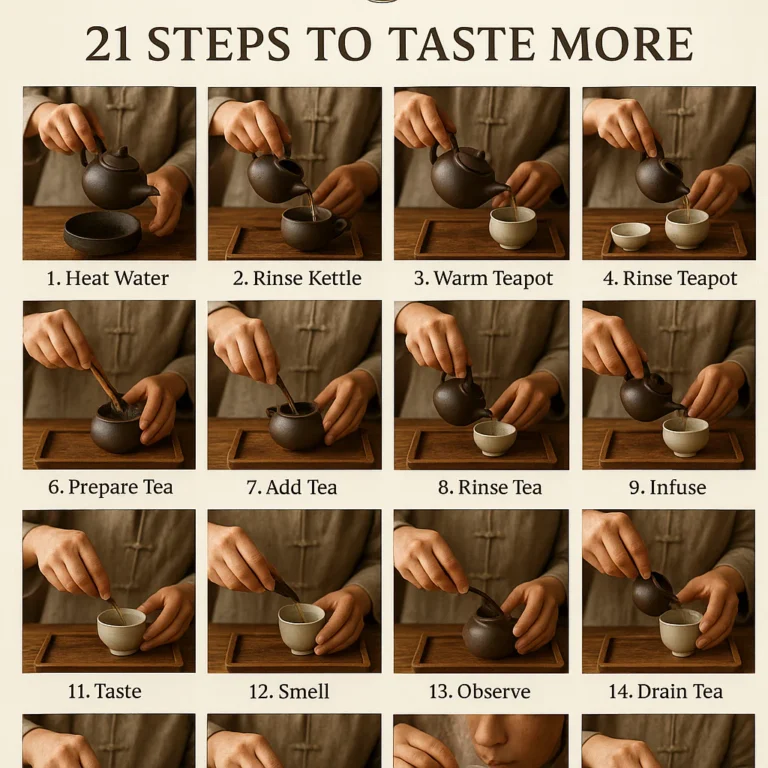
A cold teapot or mug can cool the water when you pour it in. Preheating helps your brew stay closer to its target temperature, especially when making tea for several people.
- Pour hot water into the empty vessel.
- Let it warm briefly.
- Discard that water.
- Add the tea and brew with fresh water at your chosen temperature.
This step matters most when consistency is your goal. For a casual mug of black tea, skipping it is unlikely to ruin your afternoon.
Adjust Water Temperature for Multiple Infusions
For teas meant to be steeped more than once—especially many olongs and pu-erh teas—keep the leaves and timing consistent while you explore each infusion. Some brewing styles use hotter water and short steps; others use a longer first infusion.
- Begin with the producer’s instructions.
- Taste each infusion separately.
- Extend time or adjust temperature gradually when flavor fades.
- Don’t assume every infusion needs the same time; later steps may need longer.
The fun is in noticing how the cup changes. One infusion may be floral, the next creamier, and another more mineral. That’s not inconsistency—it’s part of the tea’s character.
🔥 How to Estimate Water Temperature Without a Thermometer
Without a thermometer, you can still brew good tea. Use a kettle with temperature settings if you have one; otherwise, bring the water to a boil and let it cool briefly before pouring over more delicate leaves. Cooling speed varies with water volume, vessel material, room temperature, and the amount of water, so there isn’t a reliable universal “wait exactly X minutes” rule.
| Tea temperature target | Practical approach |
|---|---|
| 160–175°F (71–79°C) | Boil, then cool noticeably before brewing; a thermometer is more reliable |
| 175–185°F (79–85°C) | Let freshly boiled water cool briefly, then pour |
| 185–205°F (85–96°C) | Use hot water shortly after boiling, adjusted to the tea |
| 200–212°F (93–100°C) | Use water at or close to a rolling boil, if suitable for the tea |
Cooling Boiled Water for Different Tea Types
For green or delicate white tea, let the kettle sit after boiling, or pour the water into a room-temperature pitcher and then into your teapot. Transferring water to a cool vessel lowers its temperature, though the amount depends on the vessel and volume.
A more reliable routine:
- Boil fresh water.
- Pour it into a separate vessel if you want it to cool faster.
- Use a thermometer the first few times to learn how your kettle behaves.
- Repeat that routine when brewing similar amounts.
The Breville brewing guide also recommends using a thermometer or visual cues when a kettle has no temperature control. Visual cues are useful, but less precise than a reading.
How Altitude and Kettle Type Affect Boiling
At higher elevations, water boils at a lower temperature than it does near sea level. That means “boiling water” is not one exact temperature everywhere. For teas that call for near-boiling water, use water just as it reaches a vigorous boil locally; for delicate teas, cool it to the tea’s preferred range when possible.
Different kettles also heat and pour differently. A temperature display makes targeting easier, while a stovetop kettle requires more estimation. If you’re serious about repeatable green tea, a thermometer can settle the question without requiring a degree in bubble interpretation.
💧 Does Water Quality Change Tea Flavor?
Yes. Water makes up most of your cup, so its taste and mineral content can influence how tea comes across. The Specialty Tea Institute offers broader tea education, while the practical advice from experienced tea sellers is simple: use fresh water that tastes clean on its own.
Filtered, Hard, and Soft Water for Brewing Tea
- Filtered water: Often a good choice if your tap water has a noticeable chlorine or mineral taste.
- Hard water: Can mute delicate flavors or leave scale in your kettle.
- Soft water: May brew a lighter-tasting cup, depending on its mineral balance.
- Bottled water: Can work, but taste it first; “bottled” doesn’t automatically mean ideal for tea.
We don’t recommend chasing a single universal mineral profile. Taste the water plain, then compare the same tea brewed with your usual water and a clean-tasting filtered option. Keep the temperature and steep time the same.
Fresh Water, Reboiling, and Mineral Content
Start with fresh water rather than water that has been sitting in the kettle. Repeatedly boiling water can affect its taste, and mineral buildup can interfere with both kettle performance and flavor.
- Empty old water before brewing.
- Descale the kettle according to its manufacturer’s instructions.
- Avoid adding anything to the kettle that isn’t intended for it.
- If your tap water tastes unpleasant, try filtration and compare.
The biggest quality improvement may be surprisingly ordinary: a clean kettle and water you’d happily drink by itself.
🧪 Tea Temperature, Steping Time, and Leaf Amount
Temperature is only one of the three main brewing controls. Temperature, time, and leaf amount work together: hotter water and more leaf can both strengthen extraction, while a longer steep can deepen flavor without changing the water.
| If your tea tastes… | First adjustment to try | Why |
|---|---|---|
| Bitter or drying | Shorten steep time | Reduces extraction without changing your setup |
| Weak but not harsh | Add a little leaf or steep slightly longer | Builds strength gradually |
| Too sharp | Lower temperature | Gentler extraction may soften the cup |
| Flat or dull | Check water freshness and leaf quality | Brewing technique can’t restore stale tea |
| Overly strong | Reduce leaf amount | Keeps the brew balanced from the start |
How to Adjust a Brew That Tastes Bitter or Weak
Use this simple tasting sequence:
- Name the problem: bitter, dry, weak, flat, or too strong.
- Change one variable: time, temperature, or leaf amount.
- Keep the other variables fixed.
- Taste the next brew.
- Write down what worked if you want to repeat it.
For bitterness, start by shortening the steep. For a thin cup, check leaf quantity and steep time before raising the temperature. If the tea still seems out of balance, then adjust the next variable. This is how we avoid the classic kitchen experiment where everything changes and no one knows why the cup improved.
Cold-Brew Tea Temperature and Timing
Cold brewing uses cool or refrigerated water over a much longer period, often several hours. It tends to produce a gentler-tasting infusion, though the result depends on tea type, leaf amount, water, and steep length.
- Use clean, cold water and a covered container.
- Refrigerate during brewing.
- Start with the tea maker’s cold-brew instructions.
- Taste periodically and strain when the flavor is balanced.
- Keep the finished brew refrigerated and follow food-safety guidance for storage.
Cold brewing isn’t simply hot tea with the heat switched off. It’s a different extraction method, so a tea that tastes bright hot may taste softer and sweeter cold.
Iced Tea: Hot Brewing and Flash Chilling
For hot-brewed iced tea, brew a concentrated infusion using the tea’s appropriate temperature, then pour it over ice or chill it promptly. Avoid leaving leaves steeping indefinitely while the tea cools; that’s an easy route to over-extraction.
- Brew the tea at its recommended temperature.
- Use a little more leaf or less water if you’re making a concentrate.
- Remove the leaves when the brew tastes right.
- Pour over ice or chill in a clean container.
- Adjust dilution after tasting.
Different teas behave differently when chilled. Black tea often makes a bold iced brew; green tea may taste fresher when brewed more gently; hibiscus and fruit blends can be vivid and tangy. Our specialty blend guides offer more ideas for flavor combinations.
🌍 Tea-Brewing Traditions and Temperature Preferences
Brewing temperature varies by culture, tea style, equipment, and the kind of cup people enjoy. Some traditions use hot water and short infusions; others rely on a longer steep in a larger pot. Both can work beautifully.
| Brewing approach | Common method | What temperature does |
|---|---|---|
| Western-style teapot | More water, longer steep | A moderate-to-hot range builds a full cup |
| Gongfu-style brewing | More leaf, less water, repeated short steps | Hot water helps reveal changes across infusions |
| Japanese green tea preparation | Often cooler water for sencha | Can emphasize sweetness and savory notes |
| Matcha preparation | Powder whisked with hot water | Moderate heat can soften bitterness |
| Herbal infusion | Longer steep with hot water | Helps release flavor from many dried ingredients |
These are broad patterns, not rigid cultural rules. Tea type and the brewer’s preference matter more than forcing every tradition into a single chart. Our tasters have enjoyed green tea made with hotter water when the steep was brief—and a cooler cup when the leaf was particularly delicate. Temperature works best as a control, not a badge of authenticity.
🕰️ A Brief History of Tea Brewing and Water Temperature

Tea brewing has changed with the leaves, tools, and customs people use. Powdered tea preparation, whisked tea, steeped loose leaves, teabags, and modern electric kettles all invite different approaches. A temperature-controlled kettle may make today’s brewing more repeatable, but tea lovers were adjusting heat and steeping methods long before digital displays arrived.
For a concise history of tea and its traditions, explore the UK Tea & Infusions Association’s tea resources. For brewing guidance from a tea company’s tasting perspective, compare Far East Tea Company’s discussion of tea and temperature with the more detailed temperature ranges in Artful Tea’s guide.
The lasting lesson is practical: tea traditions offer useful techniques, but your own palate gets the final vote. A kettle setting is a starting note, not the whole melody.
✅ Tea Water Temperature: Common Mistakes to Avoid

- ❌ Using boiling water for every tea. Green tea and delicate white tea may taste better at lower temperatures.
- ❌ Changing temperature, time, and leaf amount together. You won’t know which change helped.
- ❌ Steping tea indefinitely. Remove the leaves when the flavor is ready.
- ❌ Treating every tea in one category alike. A roasted olong and a floral olong can prefer different approaches.
- ❌ Assuming temperature alone controls strength. Leaf quantity and steep time matter just as much.
- ❌ Ignoring the tea package. The producer may know the specific leaf better than a general chart does.
- ✅ Taste and adjust. Lower heat for harshness; add time or leaf for a weak cup.
- ✅ Use clean, fresh water. A kettle can’t compensate for unpleasant-tasting water.
- ✅ Keep notes if you’re experimenting. Your favorite cup may be only a few degrees away.
We began with a question: why do tea temperature guides disagree? Because they often describe different teas, brewing setups, and taste preferences. The most reliable approach is to start with a sensible range, follow the tea’s own instructions, and adjust one variable at a time.