Support our educational content for free when you purchase through links on our site. Learn more
Developing an Expert Tea Tasting: 10 Skills to Train 🍃

Developing an expert tea tasting starts with a repeatable routine: observe the leaf, smell the tea, brew it consistently, then assess flavor, texture, and finish. You don’t need a professional palate or a cupboard of fancy gear—just curiosity, a few well-chosen teas, and notes you can compare over time.
At one Tea Brands™ tasting, our table split over a roasted olong: some of us found toasted nuts, others noticed warm grain. A second sip, after the tea cooled, brought out a gentle sweetness that nearly everyone agreed on. That’s the fun of training your palate: each cup can tell you a little more when you know what to look for.
Key Takeaways
- Taste systematically: Assess appearance, aroma, taste, mouthfeel, and finish instead of judging a tea from one sip.
- Keep brewing consistent: Control leaf amount, water, temperature, and steep time so comparisons are meaningful.
- Write down what you notice: Simple, specific notes help you track preferences and build a useful tea vocabulary.
- Compare teas side by side: Focused tastings make differences in style, origin, and processing easier to spot.
- Trust your own palate: Tasting notes are observations, not a test—and enjoying a tea matters as much as describing it.
Table of Contents
- ⚡ Quick Tips and Facts
- 🍃 Developing an Expert Tea Tasting: What the Skill Really Involves
- 📜 A Brief History of Tea Tasting and Professional Evaluation
- ☕ Why Developing Your Tea Palate Changes Everything
- 🔍 What Does Tasting Tea Like a Pro Actually Mean?
- 🧭 The Four Pillars of Tea Tasting
- Appearance: Dry Leaf, Wet Leaf, and Liquor
- Aroma: Fragrance, Steam, and Retronasal Smell
- Taste: Sweetness, Biterness, Acidity, and Umami
- Mouthfeel and Finish: Texture, Body, and Aftertaste
- 🫖 How to Set Up a Proper Tea Tasting
- Choose Tea, Water, and Tasting Equipment
- Control Water Temperature, Leaf Ratio, and Steping Time
- Create a Calm, Neutral Tasting Environment
- 👃 A Step-by-Step Method for Tasting Tea Like an Expert
- 🗒️ Build a Tea Tasting Vocabulary and Use a Tasting Journal
- Loose Leaf Tea Flavor Notes: A Beginner’s Map
- How to Describe Aroma, Flavor, Texture, and Finish
- Tea Tasting Wheel and Flavor-Note Examples
- 🌿 Taste by Tea Type: Green, Black, White, Oolong, Pu-erh, and Herbal
- ⛰️ Why Single-Origin Tea Is the Best Training Ground
- How Teroir, Cultivar, and Harvest Shape Flavor
- Recognize Processing Styles and Their Tasting Clues
- 🧪 Compare Teas with Side-by-Side and Blind Tastings
- Design a Simple Tea Tasting Flight
- Use a Cupping Scorecard Without Overthinking It
- ⚠️ Common Mistakes That Dull Your Palate
- 📈 How to Develop Your Tea Palate Over Time
- A Practical Tea Tasting Practice Plan
- Train Your Senses with Everyday Foods and Aromas
- Get Useful Feedback from Other Tea Drinkers
- 🎓 From Curious Taster to Certified Tea Professional
- 🛍️ Tea Tasting Tools and Learning Resources
- ✅ Conclusion
- 🔗 Recommended Links
- ❓ FAQ
- 📚 Reference Links
⚡️ Quick Tips and Facts
- Taste before you judge. First ask, “What am I noticing?” Then decide whether you enjoy it. That small change turns preference into useful sensory practice.
- Use the same repeatable routine: look at the dry leaf, smell it, brew it consistently, observe the liquor, sip attentively, and check the finish.
- Keep a tasting journal. A few words such as grassy, honeyed, brisk, or silky are more useful than trying to sound like a tea encyclopedia.
- Control the variables. Use a scale, timer, and thermometer; water temperature and steep time can change what you taste.
- Compare teas side by side. Two green teas or two black teas often teach you more about flavor than a random lineup of unrelated cups.
- Taste again as the tea cools. Aroma, sweetness, bitterness, and texture can shift noticeably between hot and warm sips.
- There is no single correct tasting note. Sensory associations are personal; repeatable observations matter more than fancy vocabulary.
- A useful tasting set: plain water, small cups, a timer, a notebook, and three or four unflavored teas. No silver spoon or dramatic monocle required. 🧐
For a playful starting point, compare your own favorites with our guide to what is the world’s best-tasting tea?. The honest answer depends on what you enjoy.
| Quick fact | Why it matters |
|---|---|
| Tea’s growing conditions and processing influence its character | Origin and manufacture can help explain differences in aroma and flavor; see the FAO’s overview of tea. |
| Smell contributes greatly to flavor perception | Aroma reaches us both before sipping and through the back of the nose while tasting; the National Institute on Deafness and Other Communication Disorders explains the relationship between smell and flavor. |
| Tea types include green, black, white, olong, and dark tea | These styles differ largely through processing, not because they come from entirely unrelated plants; the Royal Botanic Gardens, Kew introduces Camellia sinensis. |
| Tea can be assessed with a consistent sensory process | Standard methods make comparisons fairer; the International Organization for Standardization’s tea standards include sensory evaluation methods. |
🍃 Developing an Expert Tea Tasting: What the Skill Really Involves
Developing expert tea-tasting skills does not mean memorizing a grand list of flavors or pretending every cup smells like an Alpine meadow at sunrise. It means learning to notice, describe, compare, and reproduce what you experience.
Our tasting team at Tea Brands™ uses a simple distinction:
- Preference: “I like this tea.”
- Observation: “It is floral, gently sweet, medium-bodied, and leaves a drying sensation.”
- Interpretation: “That combination may reflect the tea’s cultivar, growing conditions, or processing.”
The first answer is perfectly valid. The next two help you understand why you like it and what to look for in your next cup. For more guided reading, browse our Tea Brand Guides and Tea Brand Spotlights.
A useful approach is deliberate but relaxed: repeat the same tasting steps, record what you notice, and compare your notes with other tasters. You don’t need to agree about whether a tea suggests pear or melon. You do want to discover whether several people notice the same broad qualities, such as fruitiness, briskness, or a lingering sweetness.
“The key shift is from ‘Do I like this?’ to ‘What am I tasting, and why?’” — Tea Pro
That is a helpful way to frame practice—not a rule that personal enjoyment should take a back seat. Professional evaluation and everyday pleasure have different jobs. One describes; the other decides.
📜 A Brief History of Tea Tasting and Professional Evaluation

Tea has long been grown, processed, traded, and prepared in varied ways across Asia and beyond. As it became an international commodity, tasting also became a practical tool: buyers and producers needed ways to compare lots, assess quality, and identify distinctive characteristics. Tea evaluation today can involve formal protocols, but home tasters can borrow the useful principle behind them: keep comparisons consistent.
Professional tea tasters may assess dry leaf, infused leaf, liquor, aroma, flavor, and defects using standardized equipment and brewing procedures. The ISO catalogue lists tea-related standards for sampling and sensory evaluation; these are technical references, not a requirement for enjoying a cup at home.
Tea tasting is also shaped by tradition. Japanese green tea, Chinese olong, Indian black tea, and Taiwanese high-mountain tea each have distinct production histories and customary ways of preparation. A tasting method should help you notice a tea’s character without pretending that one brewing style is universal. The Kew guide to tea offers botanical context, while our specialty tea guides explore styles and brands.
☕ Why Developing Your Tea Palate Changes Everything
A more attentive palate helps you choose tea with confidence, brew it to suit your taste, and understand why one cup feels refreshing while another feels heavy or drying. It can also make a familiar tea more interesting: a second infusion might reveal a softer, sweeter side that the first steep kept under wraps.
We once tasted a roasted olong beside a lightly oxidized one. At first, the table split into “toasty and comforting” versus “too vegetal.” Then we compared aroma, texture, and finish separately. The disagreement did not disappear; it became more informative. People who disliked the first infusion enjoyed its later steps, while those who wanted a bright cup preferred the other tea.
That is the useful payoff of practice:
- Buy more intentionally: “I like floral, light-bodied teas” is clearer than “I like nice tea.”
- Brew with purpose: If a tea tastes harsh, you can test temperature or steep time before blaming the leaf.
- Notice quality differences: Freshness, leaf condition, aroma, and balance become easier to assess.
- Enjoy personal preferences without apology: Expert tasting does not require liking every tea.
For a related look at tea and wellness claims, browse our Health Benefits of Tea articles—and keep tasting enjoyment separate from medical advice.
🔍 What Does Tasting Tea Like a Pro Actually Mean?
A skilled taster makes careful observations with an open mind. That means paying attention to more than the first sip: the dry leaf, changing aromas, liquor color, mouthfeel, and aftertaste all contribute to the experience.
TeaJava’s guide organizes tasting around aroma, balance, complexity, body, and finish. That five-part framework is practical for everyday tasting, while other approaches group sensations differently. TeaJava’s article is a useful companion, not a universal grading standard.
| What you assess | Questions to ask | Example observations |
|---|---|---|
| Dry and infused leaf | Are the leaves whole, broken, rolled, twisted, or uniform? How do they smell? | Floral, grassy, roasted, woody |
| Liquor | What color and clarity do you see? | Pale gold, amber, deep red-brown |
| Aroma | What stands out before and during sipping? | Honey, fresh herbs, citrus peel |
| Taste and balance | Is the cup sweet, bitter, savory, brisk, or astringent? Do the qualities feel harmonious? | Sweetness balanced by gentle astringency |
| Body and texture | Does the tea feel light, thick, silky, crisp, or drying? | Light-bodied, creamy, mouth-coating |
| Finish | What remains after swallowing, and for how long? | Clean, sweet, toasted, drying |
Astringency deserves a quick clarification. It is the drying, puckering sensation associated with compounds in tea and is not the same as bitterness. A tea may be pleasantly astringent, just as a crisp apple can be pleasantly tart. If you are unsure, compare the sensation to strong black tea, dry red wine, or an unripe banana—but treat those comparisons as aids, not definitions.
🧭 The Four Pillars of Tea Tasting
A four-pillar model is a convenient way to train attention: appearance, aroma, taste, and mouthfeel/finish. It overlaps with TeaJava’s five qualities, which separates body and finish. Neither framework cancels out the other; one offers four broad stages, the other makes two parts more explicit.
Appearance: Dry Leaf, Wet Leaf, and Liquor
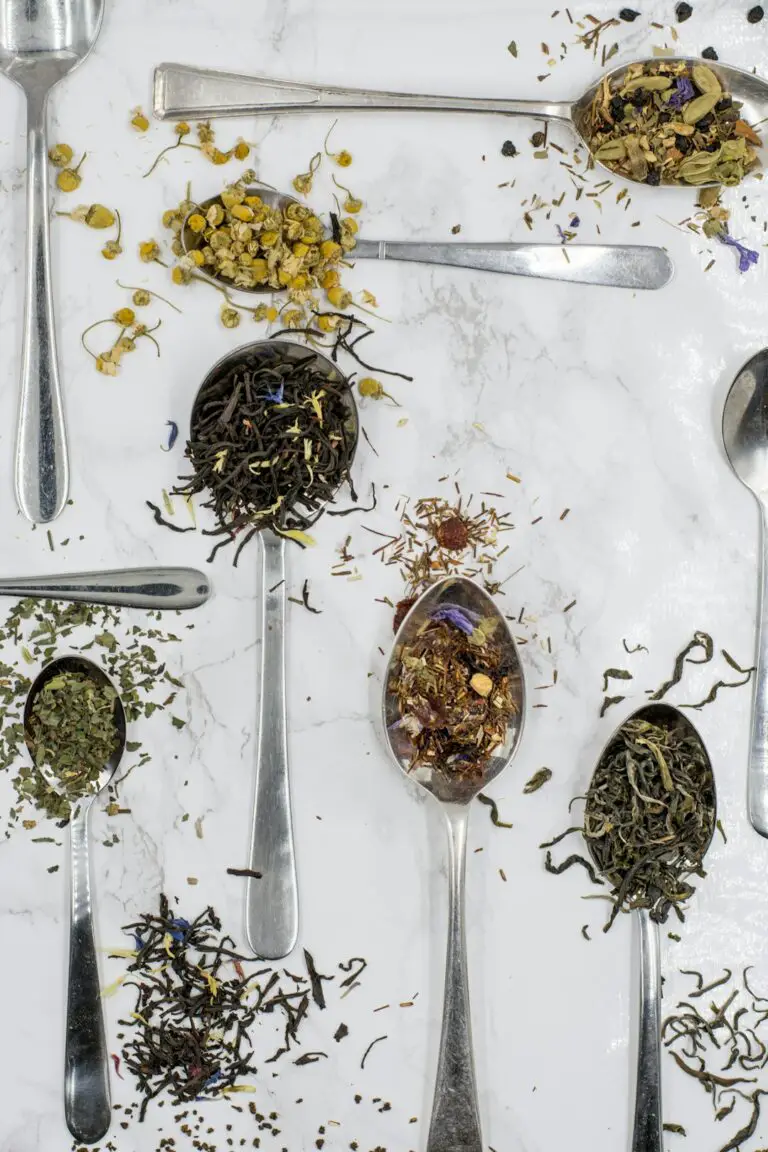
Look at the tea before brewing. Notice leaf size, color, shape, and whether the pieces appear whole or broken. After brewing, inspect the unfurled leaves and the liquor.
- Dry leaf: Does it look tightly rolled, twisted, needle-like, flat, or broken?
- Liquor: Note its color and clarity in a plain cup against a light background.
- Infused leaf: Observe how fully it opens and whether the leaves appear relatively uniform.
Appearance provides clues, not a quality verdict. A darker liquor is not automatically stronger in flavor, and a beautiful leaf does not guarantee a cup you will love. Use visual notes alongside aroma and taste. The Tea Association of the USA’s tea resources provide broader context on tea types and production.
Aroma: Fragrance, Steam, and Retronasal Smell
Smell the dry leaf, then the warm leaf and brewed tea. Take gentle, short sniffs; repeatedly inhaling strong steam can tire your nose and make scents less distinct. As you sip, notice whether aromas seem to bloom in the back of your nose.
Try this sequence:
- Smell the dry leaf from a comfortable distance.
- Add water and notice the first rising aroma.
- Smell the cup once it is safe to approach.
- Sip and notice how aroma changes during and after the sip.
- Smell the wet leaves again when the infusion is finished.
A memory can help identify an aroma—fresh-cut grass, orange peel, or toasted grain—but it is fine if your association differs from someone else’s. Smell is a major part of flavor perception, as explained by the NIDCD.
Taste: Sweetness, Biterness, Acidity, and Umami
Notice basic taste and the way flavors combine. Tea may seem sweet, bitter, savory, or gently tart, but many tasting notes—such as rose, cocoa, or stone fruit—are aromas interpreted during eating and drinking, not separate basic tastes.
Ask:
- Is there a sweet impression, and when does it appear?
- Is bitterness present? If so, is it pleasant, sharp, or overpowering?
- Does the tea feel savory or brothy?
- Is there a lively, bright impression, or does it taste round and mellow?
- Do the qualities balance, or does one dominate?
You can learn from an intense cup without assuming it is defective. First confirm the brewing method, then repeat the tea under controlled conditions. For tea-style comparisons, our Specialty Blends category includes blends whose added ingredients can also influence aroma and taste.
Mouthfeel and Finish: Texture, Body, and Aftertaste
Body describes the weight or fullness of a tea in your mouth; texture describes how it feels. The finish is what lingers after swallowing.
- Light or full-bodied: Does it feel delicate, substantial, or somewhere between?
- Texture: Is it silky, crisp, creamy, smooth, or drying?
- Finish: Does flavor vanish quickly, linger, or develop into another impression?
- Comfort: Does the cup leave your mouth refreshed, coated, or puckered?
We often invite tasters to pause after swallowing before reaching for another sip. That moment is where the finish announces itself. A tea that seems simple at first may leave a surprisingly sweet or floral trace.
🫖 How to Set Up a Proper Tea Tasting
You can taste tea well without professional cupping bowls. What matters most is that your equipment is clean and your method is repeatable. For a focused session, set out three or four unflavored teas, plain water, a timer, small cups, and somewhere to write.
Choose Tea, Water, and Tasting Equipment
| Item | Useful choice | Why it helps |
|---|---|---|
| Tea | Three or four unflavored teas, ideally chosen for comparison | Keeps the tasting focused and makes contrasts easier to notice |
| Water | Fresh, clean-tasting water | Strong mineral, chlorine, or other flavors can distract from the tea |
| Scale | Digital kitchen scale | Makes leaf portions repeatable |
| Timer | Phone timer or kitchen timer | Keeps each infusion consistent |
| Thermometer | Kettle with temperature display or a separate thermometer | Helps control a variable that affects extraction |
| Brewing vessel | Small teapot, gaiwan, or infuser | Allows straightforward brewing and pouring |
| Cups | Plain, clean cups | Avoids fragrance, detergent residue, or visual distraction |
| Notes | Notebook or simple scorecard | Captures impressions before memory edits the evidence |
For a casual session, ordinary kitchen equipment is fine. A small scale is especially helpful when comparing samples because measuring “a spoonful” can vary with leaf shape and density. A digital scale such as the OXO Good Grips kitchen scale is one possible option; it is not essential.
Control Water Temperature, Leaf Ratio, and Steping Time
There is no single brewing temperature or time for every tea. Follow the supplier’s instructions as a starting point, then adjust one variable at a time to suit the tea and your preference.
- Measure the leaf. Use a scale or the package’s recommended amount.
- Measure the water. Keep the water volume consistent across samples.
- Set the temperature. Use the tea maker’s guidance; delicate greens often call for cooler water than robust black teas, but styles vary.
- Start the timer when water meets leaf.
- Pour promptly when time is up. Leaving the leaves sitting in the pot keeps extracting compounds and can change the cup.
- Record the result. Note anything strong, weak, harsh, or especially appealing.
The UK Tea & Infusions Association’s brewing guidance offers practical preparation advice. For rigorous comparison, keep the leaf-to-water ratio, water, vessel, temperature, and steep time the same. For personal enjoyment, change one variable at a time until the cup tastes right to you.
Create a Calm, Neutral Tasting Environment
Strong smells can compete with tea aroma. Before a tasting, avoid scented candles, perfume, strongly scented hand cream, and heavily flavored snacks. Keep the room comfortable, use clean cups, and have plain water available between samples.
We once held a tasting beside freshly baked cinnamon rolls. The tea was lovely, technically; our noses, however, kept voting for pastry. Learn from our delicious mistake. 🥐
A calm setting does not need to be silent or solemn. A friendly group discussion can reveal details one person misses. Just let everyone take their first notes independently before comparing impressions, so the first confident speaker does not accidentally choose everyone else’s tasting vocabulary.
👃 A Step-by-Step Method for Tasting Tea Like an Expert
Use this repeatable routine for one tea or a full flight. It borows from professional sensory evaluation while staying comfortable enough for a kitchen table.
- Set your intention. Decide whether you are evaluating quality, learning a tea style, or simply finding out what you enjoy.
- Inspect the dry leaf. Record color, shape, size, and any visible variation.
- Smell the dry leaf. Write the first impression without searching for a perfect descriptor.
- Brew consistently. Measure water and leaf, control temperature and steep time, and use the same method for comparison samples.
- Observe the liquor. Note color and clarity; do not treat either as a stand-alone score.
- Smell the brewed tea. Look for changes from the dry-leaf aroma.
- Take a small sip. Let it move around your mouth briefly; note taste and texture.
- Pause after swallowing. Assess the finish and whether it changes.
- Taste again as it cools. Some teas become sweeter, more aromatic, or more obviously bitter as their temperature drops.
- Compare and record. Identify one similarity, one difference, and one question you would test in the next brew.
TeaJava recommends looking at aroma, balance, complexity, body, and finish; we find that list especially useful once the basic sequence becomes familiar (TeaJava). The Tea Pro tasting guide also emphasizes a structured approach and consistent practice. Both support the same practical lesson: pay attention to the whole cup rather than trying to guess a tea’s identity from one sip.
🗒️ Build a Tea Tasting Vocabulary and Use a Tasting Journal
A tasting note should help you remember the cup—not win an imaginary poetry contest. Start with broad, reliable descriptions, then get more specific when the impression is clear.
Loose Leaf Tea Flavor Notes: A Beginner’s Map
| Flavor family | Possible descriptors |
|---|---|
| Floral | Jasmine, rose, orchid, fresh blossom |
| Fruity | Citrus peel, apple, stone fruit, dried fruit |
| Vegetal | Grassy, leafy, steamed greens, fresh herbs |
| Sweet | Honey, malt, caramel, sugarcane |
| Roasted | Toasted grain, nuts, cocoa, warm bread |
| Earthy and woody | Forest floor, dry wood, mineral, damp earth |
| Marine | Seaweed, ocean air, broth |
| Spicy | Pepper, cinnamon, clove |
| Texture and finish | Silky, brisk, drying, clean, lingering |
These are descriptive associations, not ingredients unless the tea has actually been blended or flavored with them. A tea that suggests orange peel does not necessarily contain orange. The distinction matters when you’re describing a single-origin tea or reading ingredient labels.
How to Describe Aroma, Flavor, Texture, and Finish
Use a simple sentence template:
This tea smells ___; it tastes ___; it feels ___; the finish ___.
For example: “The dry leaf smells gently sweet; the cup tastes roasted and savory; the texture is smooth; the finish is clean with a little sweetness.” If you cannot identify a specific note, use a broader category: fruity rather than apricot, or floral rather than lilac.
Try separating intensity from quality. “Strong” can mean concentrated, bitter, aromatic, or simply brewed for a long time. Instead, say what is strong: “intense roast aroma,” “pronounced astringency,” or “full-bodied texture.” This small change makes your notes more useful.
Tea Tasting Wheel and Flavor-Note Examples
A flavor wheel helps you move from general to specific. Start near the center with a broad category, then work outward only if a clearer association appears. It is a prompt for observation, not a test with one correct answer.
For a practice round, smell and taste a tea without looking at a wheel. Write your notes first; then use the wheel to check whether you overlooked a category. This keeps the chart from putting words in your mouth.
TeaJava suggests notes such as malt, toasted grain, honey, dried fruit, citrus peel, flowers, fresh herbs, and wood in its tea-tasting guide. Those examples are a good starting vocabulary, not a checklist every cup must satisfy.
🌿 Taste by Tea Type: Green, Black, White, Oolong, Pu-erh, and Herbal
The five familiar tea categories—green, black, white, olong, and dark tea—are made from Camellia sinensis. Herbal infusions such as chamomile or peppermint are made from other plants, so they are not tea in the botanical sense, though they are commonly called herbal tea. For botanical background, see Kew’s tea guide.
| Style | Useful tasting questions | Commonly encountered impressions* |
|---|---|---|
| Green tea | Is it fresh, grassy, nuty, vegetal, sweet, or bitter? | Fresh greens, steamed vegetables, nuts, marine notes |
| Black tea | Is it brisk, malty, fruity, woody, or drying? | Malt, dried fruit, cocoa, citrus, spice |
| White tea | Is it delicate, floral, sweet, or subtly fruity? | Flowers, hay, melon, honey |
| Oolong | Is it more floral and bright, or roasted and creamy? | Orchid, stone fruit, toasted grain, mineral notes |
| Dark tea, including pu-erh | Is it earthy, clean, woody, mellow, or intensely fermented? | Earth, wood, dried fruit, old-book or forest-floor associations |
| Herbal infusion | What plant aromas dominate, and how do they feel in the cup? | Mint, flowers, roots, citrus, spices |
*These are possibilities, not promises. Cultivar, growing location, harvest, processing, storage, and brewing all affect the cup.
For herbal and caffeine-free options, see our Herbal Tea category. When tasting flavored blends, record both the tea base and added ingredients: a bergamot-scented Earl Grey, for example, asks a different question than an unflavored black tea.
⛰️ Why Single-Origin Tea Is the Best Training Ground
Single-origin teas are useful for learning because they let you focus on a more specific source or lot than a complex blend. That does not make them automatically better. A blend may be intentionally crafted for consistency, balance, or a particular flavor profile; single-origin tea simply gives you a different kind of comparison.
Start with two teas of the same broad style—two green teas, for instance—and compare them side by side. Once you know what distinguishes their aroma, taste, and finish, look for details about origin and production. For brand and producer stories, browse our Tea Brand Spotlights.
How Teroir, Cultivar, and Harvest Shape Flavor
Tea character can reflect several factors:
- Teroir: Growing environment, including climate, elevation, soil, and local conditions.
- Cultivar: The cultivated variety of the tea plant.
- Harvest: Timing and leaf standard can influence the character and composition of the material.
- Processing: Withering, rolling, oxidation, firing, drying, and other steps shape the finished tea.
- Storage and freshness: Exposure to heat, light, moisture, or strong odors can affect tea over time.
These factors interact; a tasting note rarely identifies one cause with certainty. The FAO tea overview and Kew’s botanical guide provide useful background. When a seller provides cultivar, harvest, and production details, treat them as context to test against your sensory experience—not flavor guarantees.
Recognize Processing Styles and Their Tasting Clues
Processing changes the leaf and the resulting cup. As a broad guide, green teas are generally processed to limit oxidation; black teas are more extensively oxidized; olong styles vary widely; white teas often receive gentler processing; and dark teas undergo processes associated with microbial activity or aging. Exact methods differ across regions and producers.
When tasting, ask what you can observe rather than trying to reverse-enginer the factory:
- Does the aroma seem fresh, floral, roasted, fruity, or earthy?
- Is the texture light, creamy, brisk, or drying?
- Does a later infusion become sweeter, softer, or more aromatic?
- Do the package or producer notes mention roasting, oxidation, aging, or firing?
A smoky impression, for example, may reflect processing, storage, or a style of tea—but a tasting note by itself cannot prove which. Look for reliable sourcing information before making a claim.
🧪 Compare Teas with Side-by-Side and Blind Tastings
Side-by-side tasting makes small differences easier to notice. Blind tasting can reduce expectations about brand, price, origin, but it is not automatically more accurate. We use both: open-label sessions for learning a tea’s context, and occasional blind rounds for checking how much that context influences our impressions.
Design a Simple Tea Tasting Flight
- Choose one comparison question. For example: “Which green tea tastes more roasted?” Avoid trying to answer five questions at once.
- Select three or four teas. Keep them broadly comparable, such as several black teas or several lightly roasted olongs.
- Use the same water and equipment. Keep leaf amount, water volume, temperature, and steep time consistent.
- Label samples clearly. If tasting blind, use neutral codes and have another person manage the key.
- Taste independently first. Record notes before group discussion.
- Compare aroma, flavor, body, balance, and finish.
- Reveal the labels, if blind. Note any expectations that changed your interpretation.
- Discuss differences without declaring a winner. Ask which tea suits a particular preference or occasion.
We prefer small flights. Six or more cups can become a blur, especially for new tasters. A focused three-tea flight leaves enough room for repeat sips and useful discussion.
Use a Cupping Scorecard Without Overthinking It
A simple scorecard can organize observations, but scores are only useful when the categories and method stay consistent.
| Category | Rating, 1–5 | Notes |
|---|---|---|
| Dry-leaf appearance | ||
| Dry-leaf aroma | ||
| Liquor appearance | ||
| Brewed aroma | ||
| Flavor and balance | ||
| Body and texture | ||
| Finish | ||
| Personal enjoyment |
Keep enjoyment separate from descriptive assessment. You might objectively find a tea aromatic and well-balanced but personally prefer a brighter style. That is not a contradiction; it is the difference between evaluating a cup and choosing one for yourself.
⚠️ Common Mistakes That Dull Your Palate
Most tasting mishaps are fixable. The biggest culprit is often not an untrained palate; it is an inconsistent brew.
- Changing several variables at once: If you alter leaf amount, temperature, and time together, you will not know what changed the cup.
- Using very hot or strongly flavored food between samples: Strong flavors may distract from delicate aromas.
- Tasting only at one temperature: A hot sip can hide details that emerge as the cup cools.
- Using vague notes like “strong”: Say whether you mean intense aroma, concentrated flavor, bitterness, or body.
- Confusing bitterness with astringency: Biterness is a taste; astringency is a drying mouthfeel.
- Expecting every tasting note to be literal: A tea can suggest peach without containing peach.
- Leting brand origin decide your verdict first: Try an independent note before reading the package description.
- Overbrewing and blaming the tea: Repeat the infusion with a controlled method before deciding the leaf is harsh.
- Tasting too many teas in one sitting: Sensory fatigue is real enough to make later samples harder to assess.
- Treating disagreement as failure: Different tasters can notice different things and still be paying excellent attention.
If you notice a persistent change in smell or taste beyond tea tasting, it may have a health-related cause rather than a “palate problem.” The NIDCD’s information on smell disorders explains when changes in smell may merit attention.
📈 How to Develop Your Tea Palate Over Time
Palate development is practice, not a dramatic transformation after one heroic sip. Frequent, short sessions are often more useful than occasional marathons. Keep tasting conditions simple, revisit familiar teas, and compare your notes over time.
A Practical Tea Tasting Practice Plan
| Practice session | Focus | What to record |
|---|---|---|
| Session 1 | Aroma | Dry leaf, brewed aroma, one broad scent family |
| Session 2 | Taste and balance | Sweetness, bitterness, savory notes, harmony |
| Session 3 | Mouthfeel and finish | Body, texture, drying sensation, lingering notes |
| Session 4 | Same tea, changed brew variable | What changed when you adjusted only time or temperature? |
| Session 5 | Side-by-side comparison | Similarities, differences, and which style you prefer |
| Session 6 | Blind tasting | Your impressions before learning the tea’s identity |
Repeat the cycle with new teas, then return to earlier samples when possible. A comparison against your own past notes can reveal real progress: you may not suddenly identify “wildflower honey,” but you might now distinguish a clean floral aroma from a roasted one.
Train Your Senses with Everyday Foods and Aromas
You can build a practical aroma vocabulary without buying a specialist kit. Smell ordinary foods one at a time: citrus peel, toasted bread, fresh herbs, nuts, cocoa, dried fruit, or flowers. Notice whether an aroma is fresh, sweet, earthy, roasted, or sharp.
The goal is not to memorize a catalogue. It is to build reference points that help you describe what you actually smell in tea. Avoid tasting anything you are allergic to, and never use unfamiliar plants as aroma samples unless you know they are safe.
A personal “smell library” can be as simple as a few safe kitchen ingredients. We often reach for orange peel, fresh mint, and toasted grain because the categories are distinct and easy to remember.
Get Useful Feedback from Other Tea Drinkers
Taste with people whose opinions you respect, but write your own notes first. Then compare:
- What did several people notice?
- Which impressions were unique to one taster?
- Did anyone describe the same sensation using different words?
- Did the tea change as it cooled?
- What would you test in another brew?
A group’s agreement can help identify a shared impression, but it does not make every other response wrong. One taster may say cocoa, another toasted grain; both might be responding to the same roasted character. Keep the discussion curious rather than turning the scorecard into a courtroom.
🎓 From Curious Taster to Certified Tea Professional
If you want to go beyond home practice, look for courses that teach sensory evaluation, tea processing, brewing, origin, and quality assessment. Choose a program that clearly describes its curriculum, practical tasting component, instructor qualifications, and any certification or examination. A certificate can structure learning, but it does not automatically make someone’s palate infallible.
Before enrolling, ask:
- Does the course include guided tasting and feedback?
- Are students taught to compare teas systematically?
- Does it explain processing and origin alongside flavor?
- Is the credential recognized by employers or industry organizations relevant to your goal?
- Can you see sample lessons, course outcomes, or instructor experience?
For readers exploring the tea trade, professional education may be useful. For most enthusiasts, a consistent routine, trustworthy sourcing, and a tasting journal will go a long way without formal credentials.
🛍️ Tea Tasting Tools and Learning Resources
You can start with what is already in your kitchen. If you want a more repeatable setup, prioritize tools that improve measurement and comparison rather than decorative gadgets.
| Tool or resource | What it helps with | Example |
|---|---|---|
| Digital scale | Consistent leaf measurement | OXO kitchen scales |
| Thermometer kettle | Repeatable water temperature | Bonavita temperature-control kettles |
| Small teapot or gaiwan | Straightforward brewing and multiple infusions | Gaiwan brewing sets |
| Tasting cups | Small, comparable samples | Plain tea tasting cups |
| Tea flavor reference | Vocabulary and structured comparison | Tea sensory evaluation books |
| Guided learning | Context on brands and styles | Tea Brand Guides |
Features and drawbacks to consider:
- ✅ A scale and timer are affordable in effort and easy to use with existing tea gear.
- ✅ A temperature-control kettle can improve repeatability across different tea styles.
- ✅ Plain cups make side-by-side tasting easier.
- ❌ A specialized tasting set cannot compensate for stale tea, unsuitable water, or inconsistent brewing.
- ❌ A flavor wheel can nudge you toward descriptors you might not have noticed independently.
- ❌ Buying many teas at once can leave you with a cupboard full of experiments and no clear comparison plan.
👉 CHECK PRICE on:
- Bonavita temperature-control kettle: Amazon search | Bonavita official website
- OXO digital kitchen scale: Amazon search | OXO official website
- Gaiwan tea-brewing set: Amazon search
- Plain tea tasting cups: Amazon search
- Tea sensory evaluation books: Amazon search