Support our educational content for free when you purchase through links on our site. Learn more
🌍 The Ultimate Guide to Tea of the World: 10 Must-Try Cups


The best tea of the world isn’t a single legendary leaf, but a global tapestry of flavors ranging from Japan’s creamy Matcha to India’s malty Assam, waiting for you to explore. While the phrase “Tea The World” suggests a simple tour, the reality is a complex journey through six distinct processing styles and countless microclimates that define every sip.
Did you know that over 3 billion cups of tea are consumed globally every single day? Yet, most people only know the difference between “green” and “black,” missing out on the nuanced world of Oolongs, Whites, and Pu-erhs. We once tasted a rare Yunnan Pu-erh that smelled like wet earth and old library books, and it completely changed our perspective on what tea could be.
Whether you are a seasoned conoisseur or just looking to upgrade your morning mug, understanding the origins of your brew is the first step to true appreciation. This guide cuts through the noise to bring you the definitive tea of the world experience, from the misty hills of China to the highlands of Sri Lanka.
Key Takeaways
- All true teas come from one plant: The Camellia sinensis leaf transforms into White, Green, Oolong, Black, or Pu-erh based entirely on oxidation levels and processing methods.
- Teroir is everything: Just like wine, the climate, soil, and altitude of a region (like Darjeling or Yunnan) dictate the unique flavor profile of the tea.
- Brewing matters more than you think: Using boiling water on delicate green tea scorches the leaves, creating bitterness; temperature control is the secret to a perfect cup.
- Ethical sourcing counts: Look for Fair Trade and Organic certifications to support sustainable farming and fair wages for tea workers globally.
Table of Contents
- ⚡️ Quick Tips and Facts
- 🌍 A Sip Through History: The Global Journey of Tea
- 🍵 The Big Six: Understanding the True Types of Tea
- 🇨🇳 1. China: The Birthplace of Camellia Sinensis
- 🇮🇳 2. India: The Land of Bold Assam and Aromatic Darjeling
- 🇯🇵 3. Japan: The Art of Matcha and Sencha
- 🇰🇪 4. Kenya: The Powerhouse of Black Tea
- 🇹🇼 5. Taiwan: Masters of Oolong and Milk Tea
- 🇱🇰 6. Sri Lanka: The Ceylon Standard for Brightness
- 🌿 Beyond the Leaf: Herbal Infusions and Tisanes from Around the Globe
- 🧪 The Science of Steping: Temperature, Time, and Teroir
- 🛒 How to Choose the Best Loose Leaf Tea Brands for Your Cup
- 🍃 From Farm to Cup: The Ethics of Sustainable Tea Sourcing
- 🥣 Brewing Rituals: Traditional Methods from the World’s Tea Cultures
- 🍋 Creative Blends: How to Mix Global Flavors at Home
- 🏆 Top 10 Must-Try Teas from Every Continent
- ❓ Frequently Asked Questions About World Teas
- 🔗 Recommended Links for the Curious Siper
- 📚 Reference Links and Sources
- 🏁 Conclusion: Your Passport to the Perfect Cup
⚡️ Quick Tips and Facts
Before we pack our virtual suitcases and board the plane to the world’s most famous tea gardens, let’s hit the pause button on the chaos. You might think you know your Earl Grey from your English Breakfast, but the world of tea is a vast, swirling ocean of flavor, history, and a few stubborn myths that need busting.
Here at Tea Brands™, we’ve tasted our way through thousands of cups, and we’ve learned that teroir matters just as much as the grape in wine. Did you know that 9% of the world’s tea comes from just two species of the Camellia sinensis plant? The difference between a delicate Japanese Sencha and a bold Indian Assam isn’t the plant; it’s the processing method and the climate.
- The Big Secret: All “true” teas (Black, Green, White, Oolong, Pu-erh, Yellow) come from the same plant. The magic happens in how the leaves are oxidized.
- Water Temperature is King: Boiling water kills delicate green tea. We’re talking 175°F (80°C) for greens and 212°F (10°C) for robust blacks. Get this wrong, and you’re drinking bitter soup, not tea.
- The “Teaification” Debate: Ever heard the phrase “teaification process”? It’s not just about steeping; it’s about respecting the leaf. As we’ll see later, the method of boiling water (stove vs. microwave) is a battle that divides tea lovers as fiercely as pineapple on pizza.
If you’re wondering which tea is best in the world?, the answer isn’t a single cup. It’s a journey. Check out our deep dive on Which tea is best in the world? to see how we rank the contenders.
🌍 A Sip Through History: The Global Journey of Tea
Tea didn’t just appear in a teacup; it was a traveler, a diplomat, and sometimes, a catalyst for revolution. Our story begins not in a cozy British parlor, but in the misty mountains of Yunnan, China, around 2737 BCE. Legend has it that Emperor Shen Nung was boiling water under a wild tea tree when a few leaves drifted in. The result? A refreshing brew that he declared a medicinal elixir.
From there, the leaf traveled the Silk Road, reaching India, Japan, and eventually Europe. But it wasn’t always smooth sailing. The Opium Wars were fought over tea trade imbalances, and the Boston Tea Party was a direct result of tea taxes.
“The strength of the tea industry will continue to enhance the overall hospitality experience,” notes the global tea community, echoing the sentiment that tea is more than a drink; it’s a connector.
Today, tea is the second most consumed beverage on the planet, trailing only water. But how did we get from a medicinal leaf to a global phenomenon? Let’s break down the Big Six tea-producing nations that define our daily cups.
🍵 The Big Six: Understanding the True Types of Tea
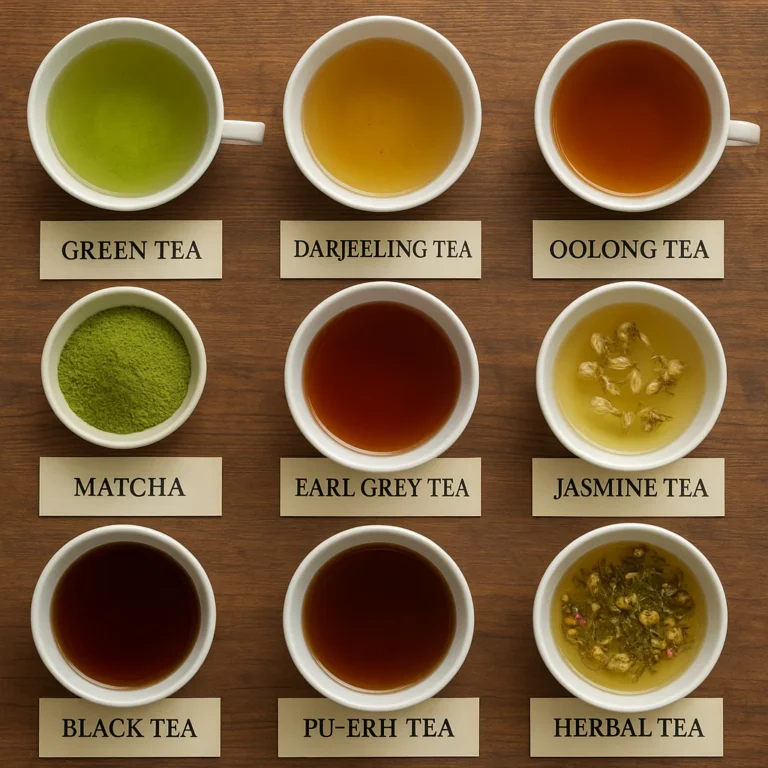
Before we hop on a plane to specific countries, we need to understand the six main categories of tea. These aren’t just flavors; they are distinct processing styles that transform the Camellia sinensis leaf.
| Tea Type | Oxidation Level | Flavor Profile | Best Brewing Temp |
|---|---|---|---|
| White Tea | 0-10% | Delicate, floral, sweet | 175°F (80°C) |
| Green Tea | 0-10% | Grassy, vegetal, fresh | 175°F (80°C) |
| Oolong Tea | 10-70% | Floral, fruity, creamy, toasty | 195°F (90°C) |
| Black Tea | 80-10% | Bold, malty, robust | 212°F (10°C) |
| Pu-erh Tea | Post-fermented | Earthy, wody, smooth | 212°F (10°C) |
| Yellow Tea | 10-20% | Mellow, sweet, less astringent | 175°F (80°C) |
Note: Herbal teas like chamomile or peppermint are technically tisanes, not true teas, as they don’t come from the Camellia sinensis plant. We’ll explore those in a later section!
🇨🇳 1. China: The Birthplace of Camellia Sinensis
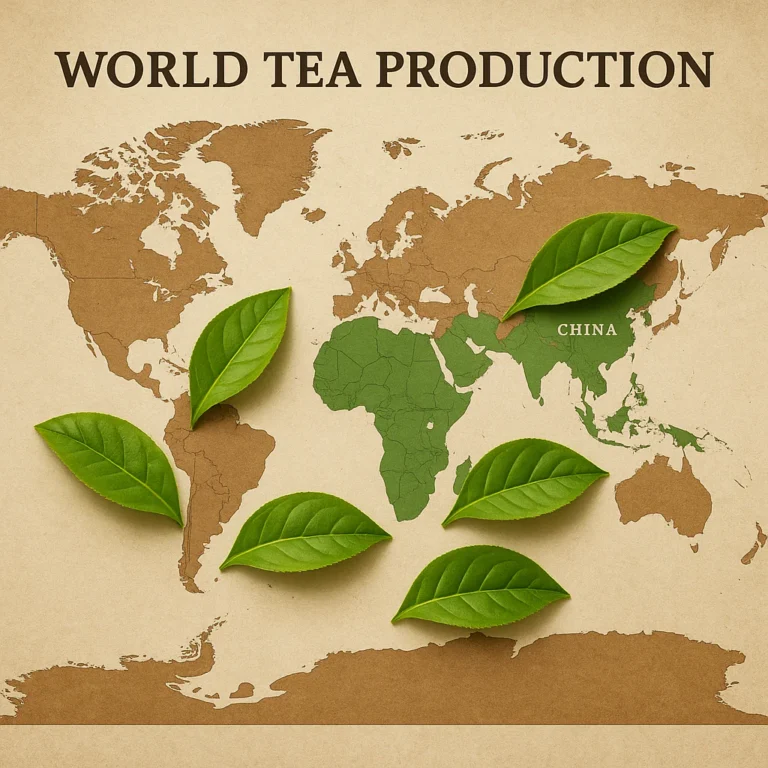
China is the cradle of tea culture. It’s where the story began, and it’s still the largest producer of tea in the world. But don’t think of China as a monolith; the flavor profiles vary wildly from province to province.
The Diversity of Chinese Tea
- Longjing (Dragon Well): A famous green tea from Hangzhou. It’s pan-fired, giving it a chestnut-like aroma and a flat, sword-shaped leaf.
- Da Hong Pao (Big Red Robe): A legendary Oolong from the Wuyi Mountains. It’s roasted to perfection, offering roasted mineral notes and a lingering sweetness.
- Pu-erh: A fermented tea from Yunnan. It ages like wine, developing earthy, mushroomy, and sometimes funky flavors.
Pro Tip: When buying Chinese Oolong, look for the “rock tea” (Yancha) style for a mineral punch, or the “Tie Guan Yin” for a creamy, floral experience.
Why China Dominates
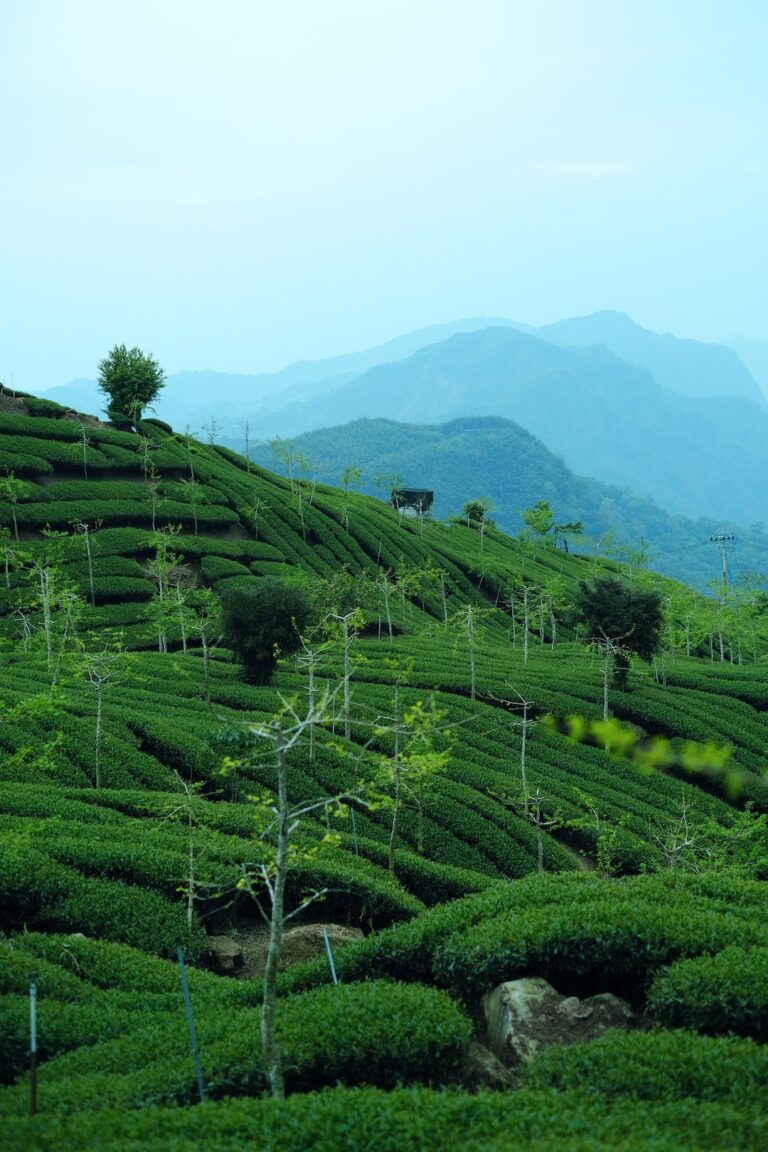
China’s vast geography creates microclimates perfect for every tea type. From the high-altitude gardens of Tibet to the humid lowlands of Fujian, the teroir is unmatched.
🇮🇳 2. India: The Land of Bold Assam and Aromatic Darjeling
If China is the scholar of tea, India is the bold athlete. India is the second-largest tea producer globally, famous for its robust black teas that stand up to milk and sugar.
The Two Giants
- Assam: Grown in the Brahmaputra Valley, this tea is malty, brisk, and full-bodied. It’s the backbone of your morning English Breakfast.
- Darjeling: Often called the “Champagne of Teas,” this comes from the Himalayan foothills. It’s lighter, floral, and muscatel (grape-like) in flavor.
The Second Flush
Did you know that Darjeling has “flushes”? The Second Flush (May/June) is the most prized, offering that signature muscatel flavor. The First Flush is more astringent and green, while the Autumnal Flush is darker and spicier.
Fun Fact: The British established tea plantations in India in the 1830s to break China’s monopoly on the tea trade. Today, India produces over 1.2 billion kilograms of tea annually.
🇯🇵 3. Japan: The Art of Matcha and Sencha
Japan took the Chinese tea ceremony and refined it into a spiritual art form. Japanese tea is unique because the leaves are steamed rather than pan-fired, preserving their vibrant green color and grassy flavor.
The Stars of the Show
- Matcha: Shade-grown green tea leaves ground into a fine powder. You consume the entire leaf, resulting in a creamy texture and a massive caffeine boost.
- Sencha: The most common Japanese green tea. It’s steamed, rolled, and dried, offering a vegetal, umami-rich taste.
- Gyokuro: The “Jade Dew.” Grown in the shade for weeks before harvest, it’s incredibly sweet and rich in umami.
The Steaming Difference
Unlike Chinese green teas, which are pan-fired, Japanese green teas are steamed. This stops oxidation instantly, locking in the chlorophyll and the fresh, grassy notes.
🇰🇪 4. Kenya: The Powerhouse of Black Tea
Kenya is the third-largest tea producer in the world and the largest exporter of black tea. While it might not have the centuries-old history of China or India, its tea is a modern marvel of efficiency and flavor.
The CTC Method
Most Kenyan tea is processed using the CTC (Crush, Tear, Curl) method. This creates small, uniform pellets that brew quickly and produce a strong, brisk, and reddish liquor. It’s the perfect base for tea bags and blends.
Why It’s Special
Kenyan tea is known for its bright, citrusy notes and deep color. It’s often used in breakfast blends to add a “kick” of flavor.
Did You Know? Over 90% of Kenyan tea is exported, making it a crucial part of the country’s economy.
🇹🇼 5. Taiwan: Masters of Oolong and Milk Tea
Taiwan (Formosa) is a small island, but it punches way above its weight in the tea world. It’s famous for its high-mountain Oolongs and the invention of Bubble Tea.
The High-Mountain Oolongs
Taiwan’s high-altitude gardens (over 1,0 meters) produce Oolongs that are creamy, floral, and incredibly smooth. The most famous is Formosa Oolong (also known as Dong Ding or High Mountain Oolong).
The Bubble Tea Revolution
Taiwan is the birthplace of Bubble Tea (Boba). This sweet, milky tea with tapioca pearls has taken the world by storm. But don’t let the sugar mask the quality of the tea base; a good bubble tea starts with a solid black or green tea.
🇱🇰 6. Sri Lanka: The Ceylon Standard for Brightness
Formerly known as Ceylon, Sri Lanka is famous for its Ceylon Tea. The island’s diverse climate creates a range of flavor profiles, from the light and citrusy low-grown teas to the bold and spicy high-grown teas.
The Three Elevations
- Low Grown: Full-bodied, strong, and dark.
- Mid Grown: Balanced, with a hint of spice.
- High Grown: Delicate, aromatic, and bright.
The Ceylon Label
The Ceylon Lion Logo is a guarantee of quality. If you see it, you know you’re getting 10% pure Sri Lankan tea.
🌿 Beyond the Leaf: Herbal Infusions and Tisanes from Around the Globe
Not all “tea” comes from the Camellia sinensis plant. Herbal teas, or tisanes, are infusions made from herbs, fruits, flowers, and spices. They are naturally caffeine-free (mostly) and offer a world of flavor.
Global Herbal Stars
- Chamomile (Egypt/Germany): Known for its calming, apple-like flavor. Perfect for bedtime.
- Hibiscus (Mexico/Africa): Tart, cranberry-like, and vibrant red. Often served cold.
- Rooibos (South Africa): Naturally sweet, nuty, and rich in antioxidants.
- Peppermint (USA/Europe): Refreshing, cooling, and great for digestion.
Check out our guide on Herbal Tea for more on these caffeine-free wonders!
🧪 The Science of Steping: Temperature, Time, and Teroir
You can have the best tea in the world, but if you brew it wrong, it’s going to taste like dishwater. Let’s break down the science of steeping.
The Golden Rules
- Water Quality: Use filtered water. Chlorine and minerals can ruin the flavor.
- Temperature:
White/Green: 175°F – 185°F (80°C – 85°C)
Oolong: 195°F – 205°F (90°C – 96°C)
Black/Pu-erh: 212°F (10°C) - Time:
Green: 2-3 minutes
Black: 3-5 minutes
Oolong: 3-5 minutes (can be re-steped)
The Microwave Debate
Remember that video we mentioned earlier? The one where two friends argue about boiling water in a microwave? One says, “It takes less than a minute,” while the other insists, “The stovetop is enchanted.”
Here’s the truth: Microwaving water can create “superheated” water, which doesn’t bubble properly and can lead to uneven extraction. Plus, the lack of agitation means the water doesn’t mix well with the tea leaves. Stovetop or electric kettle is the way to go for a consistent, perfect cup.
🛒 How to Choose the Best Loose Leaf Tea Brands for Your Cup
Ready to upgrade your tea game? Lose leaf tea is superior to tea bags because the leaves have room to expand, releasing their full flavor. But how do you choose?
What to Look For
- Whole Leaves: Avoid dust or fannings. You want whole or large broken leaves.
- Freshness: Check the harvest date. Tea is best consumed within 6-12 months of harvest.
- Origin: Look for specific regions (e.g., “Darjeling First Flush”) rather than generic “Black Tea.”
Top Brands to Try
- Harney & Sons: Great for beginners, wide variety.
- Adagio Teas: Customizable blends and high-quality loose leaf.
- Yunnan Sourcing: The go-to for authentic Pu-erh and Yunnan teas.
- Mariage Frères: French elegance with exotic blends.
👉 Shop
- Harney & Sons: Amazon | Official Site
- Adagio Teas: Amazon | Official Site
- Yunnan Sourcing: Official Site
🍃 From Farm to Cup: The Ethics of Sustainable Tea Sourcing
Tea is a crop that relies on fair labor and sustainable farming. But the industry has its dark sides, including child labor and deforestation.
What to Look For
- Fair Trade Certified: Ensures fair wages and safe working conditions.
- Organic: No synthetic pesticides or fertilizers.
- Rainforest Alliance: Focuses on biodiversity and sustainable farming.
Did You Know? The World Tea Expo is a major B2B event where brands connect with suppliers to source ethical and sustainable tea. As they say, “Let’s make them good for the world.”
🥣 Brewing Rituals: Traditional Methods from the World’s Tea Cultures
Tea isn’t just a drink; it’s a ritual. From the Japanese tea ceremony to the British afternoon tea, each culture has its own way of honoring the leaf.
The Japanese Tea Ceremony (Chanoyu)
A meditative practice involving the preparation of Matcha. Every movement is precise, from whisking the tea to serving it to guests.
The British Afternoon Tea
A social event featuring scones, clotted cream, and sandwiches alongside a pot of black tea. It’s a tradition of elegance and conversation.
The Chinese Gongfu Cha
A method of brewing Oolong or Pu-erh in small pots with multiple short infusions. It highlights the changing flavors of the tea.
🍋 Creative Blends: How to Mix Global Flavors at Home
Feling adventurous? Try blending teas from different regions to create your own signature cup.
Flavor Pairing Ideas
- Earl Grey + Jasmine: Citrus meets floral.
- Chai + Matcha: Spicy meets creamy.
- Rooibos + Vanilla: Sweet and nuty.
Check out our Specialty Blends category for more inspiration!
🏆 Top 10 Must-Try Teas from Every Continent
Ready to taste the world? Here are our top 10 picks, one from each major tea region (and a few extras for good measure).
- China: Longjing (Dragon Well) Green Tea
- India: Darjeling Second Flush
- Japan: Gyokuro
- Kenya: CTC Black Tea
- Taiwan: High Mountain Oolong
- Sri Lanka: Ceylon Uva
- South Africa: Rooibos
- Morocco: Mint Tea (Green Tea + Peppermint)
- Argentina: Yerba Mate
- Russia: Black Tea with Lemon and Sugar
👉 Shop these teas on:
❓ Frequently Asked Questions About World Teas
What is the most popular tea in the world?
Black tea is the most popular globally, accounting for about 78% of tea consumption. It’s the base for most tea bags and blends. However, Green tea is gaining popularity due to its health benefits.
Which country produces the highest quality tea?
“Quality” is subjective, but Japan is often cited for its delicate, high-quality green teas, while China is renowned for its diverse Oolongs and Pu-erhs. India and Sri Lanka are famous for their bold black teas.
How do I brew the perfect cup of tea from around the world?
- Use fresh, filtered water.
- Heat to the correct temperature (see our science section).
- Step for the right time (don’t over-step!).
- Enjoy without milk or sugar first to taste the true flavor.
What are the health benefits of different teas from various regions?
- Green Tea: High in antioxidants (catechins), may boost metabolism.
- Black Tea: Good for heart health and gut bacteria.
- Oolong: May help with weight loss and skin health.
- Herbal Teas: Vary by herb (e.g., Chamomile for sleep, Peppermint for digestion).
Learn more about the Health Benefits of Tea on our site!
🔗 Recommended Links for the Curous Siper
Ready to dive deeper? Here are some resources to expand your tea knowledge.
- Books:
The Story of Tea by Betty Zhu and Martin Jacobson
Tea: A History of the Leaf by William H. Ukers - Websites:
- World Tea News
- Tea The World (Note: Check for security verification if access is blocked)
- Tea Brands™ Category: Tea Brand Spotlights
- Tea Brands™ Category: Tea Brand Guides
📚 Reference Links and Sources
- World Tea Expo
- World Tea News
- Tea The World
- Tea Brands™: Which tea is best in the world?
- Tea Brands™: Herbal Tea Category
- Tea Brands™: Specialty Blends Category
- Tea Brands™: Health Benefits of Tea Category
🏁 Conclusion: Your Passport to the Perfect Cup

So, there you have it. From the misty mountains of Yunnan to the high-altitude gardens of Taiwan, the world of tea is a vast, flavorful adventure. We’ve debunked the microwave myth, explored the Big Six tea-producing nations, and even tried to answer the age-old question: Which tea is best in the world?
The answer? It depends on your mood, your palate, and your moment. Whether you’re craving the creamy floral notes of a Taiwanese Oolong or the bold, malty punch of an Indian Assam, there’s a tea out there for you.
Remember, the journey is just as important as the destination. So, grab your favorite mug, heat your water on the stovetop (not the microwave!), and take a sip of the world.
Ready to start your tea journey? Check out our Tea Brand Spotlights for curated recommendations, or dive into our Tea Brand Guides for detailed reviews.
Happy sipping! 🍵✨