Support our educational content for free when you purchase through links on our site. Learn more
15 Gourmet Tea Bag Blends to Tempt Your Taste Buds 🍵

The best gourmet tea bag blends for unique flavor profiles balance a characterful tea base with ingredients that add something surprising—not just a loud blast of flavoring. Our tasters recommend starting with Earl Grey and lavender for citrus-floral complexity, jasmine green tea with pear for a lighter cup, or vanilla rooibos when you want a mellow, caffeine-free treat.
At a tasting, one of our tasters expected chocolate-mint black tea to taste like a melted candy bar. Instead, the cocoa note was subtle, the mint lingered, and the black tea held its ground—a good reminder that the most interesting blends leave room for the tea itself. Curious where your palate will land? The 15 blends ahead range from familiar chai to smoky lapsang souchong with citrus.
Key Takeaways
- Start with the tea base: Black tea brings body, green tea tends to taste fresher, and rooibos offers a naturally caffeine-free foundation.
- Choose flavor notes you already enjoy: Try floral, fruity, spicy, roasted, or dessert-like blends as a guide to your next cup.
- Check ingredients and caffeine: Flavor names don’t always mean the named fruit or flower is actually in the bag.
- Brew to suit the tea: Water temperature and steeping time can make the difference between a balanced cup and a bitter one.
- Compare real collections: Explore The Tea Spot’s flavored teas, Harney & Sons, and Numi Organic Tea for a range of tea styles and blends.
Table of Contents
- ⚡️ Quick Tips and Facts
- 🍵 What Makes a Tea Bag Blend “Gourmet”?
- 📜 A Brief History of Blended and Flavored Tea
- 🌿 The Building Blocks of Unique Tea Flavor Profiles
- Black, green, white, olong, and herbal tea bases
- Flowers, fruit, spices, herbs, and other inclusions
- Natural flavorings versus artificial flavorings
- ✨ 15 Gourmet Tea Bag Blends for Unforgettable Flavor
- 1. Earl Grey with bergamot and lavender
- 2. Jasmine green tea with pear
- 3. Masala chai with warming spices
- 4. Chocolate mint black tea
- 5. Peach olong with osmanthus
- 6. White tea with rose and lychee
- 7. Lemon ginger with turmeric
- 8. Hibiscus berry herbal tea
- 9. Smoky lapsang souchong with citrus
- 10. Toasted rice green tea with matcha
- 11. Rooibos with vanilla and almond
- 12. Apple cinnamon black tea
- 13. Coconut mango green tea
- 14. Mint cacao herbal infusion
- 15. Chamomile with honeybush and citrus
- 🧭 How to Choose a Blend for Your Taste
- Match flavor notes to your palate
- Choose tea for morning, afternoon, or evening
- Check caffeine levels and ingredients
- 🫖 How to Brew Gourmet Tea Bags for the Best Flavor
- Water temperature and steeping time by tea type
- Avoiding bitter, weak, or overly perfumed tea
- Making iced tea and tea lattes
- 🔍 Tea Bag Materials, Quality, and Sustainability
- Pyramid sachets versus flat tea bags
- Compostable, plastic-free, and recyclable tea bags
- How to assess leaf quality and freshness
- 🍰 Pairing Gourmet Tea Blends with Food
- 🎁 Tea Gifts, Samplers, and Tasting Sets
- 🏷️ Notable Gourmet Tea Brands and Blend Collections
- 💡 Storage Tips for Keeping Tea Fresh
- ✅ Conclusion
- 🔗 Recommended Links
- ❓ FAQ
- Which gourmet tea bag blends have the most unusual flavors?
- Are flavored tea bags made with real fruit and flowers?
- What is the best gourmet tea blend for someone new to tea?
- Do gourmet tea bags contain caffeine?
- How long should I steep a gourmet tea bag?
- Can I reuse a gourmet tea bag?
- How should I store gourmet tea bags?
- 📚 Reference Links
⚡️ Quick Tips and Facts
The right blend can taste like a fruit tart, a flower garden, or a spice market—without requiring more effort than dunking a tea bag. If you’re comparing everyday options, start with our guide to the best tea bag brands, then use the flavor map below to find a more adventurous cup. 🍵
| Quick fact | What to know |
|---|---|
| “Gourmet” isn’t a regulated tea grade | Treat it as a cue to inspect the tea base, ingredient list, blend design, and freshness—not as an automatic quality guarantee. |
| Tea type affects caffeine | Black, green, white, and olong teas generally contain caffeine; herbal infusions such as rooibos and chamomile are naturally caffeine-free unless blended with caffeinated tea. The FDA notes that caffeine content varies by product and preparation. |
| The bag affects the brew | A roomy sachet can give larger leaves and inclusions more space than a tightly packed small bag, though bag shape alone doesn’t guarantee better tea. |
| Flavor notes aren’t always ingredients | “Peachy,” “honeyed,” or “cocoa-like” may describe aroma and taste rather than actual peach, honey, or chocolate. Check the label. |
| Start with less time, then adjust | Step according to the package directions. If the cup tastes too strong, shorten the next infusion; if too light, try a little longer. |
| Sampler boxes are useful palate training | Variety packs let you compare floral, fruity, spicy, and roasted profiles before committing to one style. |
Our tasters’ quick picks: Earl Grey with lavender for a fragrant black tea, jasmine green with pear for a softer floral-fruit pairing, and rooibos with vanilla for a caffeine-free dessert-like cup. For more blends and tea-making ideas, browse our specialty blends and herbal tea guides.
🍵 What Makes a Tea Bag Blend “Gourmet”?
“Gourmet” works best as a description of careful flavor construction, not a magic stamp of superiority. A well-designed blend brings the tea base, added ingredients, and aroma into balance. You should still be able to taste the tea—not just a loud blast of vanilla or fruit flavoring.
A gourmet blend might use a distinctive tea origin, whole spices, recognizable flowers, thoughtfully chosen natural flavorings, or a combination that develops as the cup cools. It can also be an excellent tea bag, not only a loose-leaf tea packed into a fancy tin.
What we look for in the cup
At Tea Brands™, we taste blends across several dimensions:
- A clear tea character: Assam can bring malt and body; sencha often tastes fresh and vegetal; rooibos tends toward earthy sweetness.
- Flavor harmony: Fruit should lift the tea, not flatten it. Spice should add warmth without turning the cup into potpouri.
- Aroma that matches the sip: A fragrant dry bag is lovely, but the brewed tea should deliver on that promise.
- A satisfying finish: Look for a clean, lingering aftertaste rather than harsh bitterness or artificial-tasting sweetness.
- Useful ingredient transparency: Labels should identify the tea type and disclose added ingredients and flavorings.
The Tea Spot’s collection describes a range of fruity, spicy, floral, and dessert-inspired teas, while its flavored-tea page spans black, green, white, olong, and herbal styles. That variety is a helpful reminder: the base tea matters as much as the flavor idea. See The Tea Spot’s gourmet tea collection and flavored tea range.
A practical gourmet-tea checklist
| Look for | Why it matters | A question to ask |
|---|---|---|
| Named tea base | Helps you anticipate body, aroma, and caffeine | Is it black, green, white, olong, or herbal? |
| Balanced ingredient list | Gives clues to the blend’s intended character | Do the spices, flowers, or fruit overwhelm the tea? |
| Clear flavor description | Sets expectations without promising the impossible | Are the notes sensory descriptions or actual ingredients? |
| Suitable bag or sachet | Affects leaf movement and brewing convenience | Does the tea have room to infuse? |
| Brewing guidance | Helps prevent an avoidable bitter cup | Are temperature and steep time provided? |
| Fresh, protected packaging | Preserves delicate aroma | Are the bags sealed individually or stored in an airtight carton? |
📜 A Brief History of Blended and Flavored Tea

Tea blending has long been a way to create consistency, distinctive house styles, and flavors suited to different tastes. Some blends, such as Earl Grey, are now familiar classics; others take inspiration from regional spice traditions, perfumed teas, or modern dessert flavors.
The tea bag helped make tea easier to brew at home and at work, while modern sachets made it more practical to pack larger leaf pieces and decorative ingredients. But the core idea is old-fashioned in the best way: combine ingredients thoughtfully and let aroma lead the invitation.
Today’s flavored tea shelf ranges from traditional bergamot and jasmine to mango-coconut green tea and cacao-mint infusions. The Tea Spot’s collection is one example of how brands group flavored blends across multiple tea types, rather than treating flavor as a black-tea-only affair. For brand histories and product-focused coverage, explore our Tea Brand Spotlights.
🌿 The Building Blocks of Unique Tea Flavor Profiles
A blend’s flavor comes from the interaction of its tea base, added ingredients, aroma, water, and brewing time. The same rose petals can seem delicate in white tea and more like a fragrant accent in a robust black tea.
Black, green, white, olong, and herbal tea bases
| Base | Typical flavor character | Often pairs well with | Common brewing caution |
|---|---|---|---|
| Black tea | Full-bodied, malty, brisk, sometimes fruity | Bergamot, cacao, vanilla, apple, chai spices | Oversteping can bring out bitterness or astringency |
| Green tea | Fresh, grassy, vegetal, nuty, or marine | Jasmine, citrus, pear, toasted rice, mint | Very hot water can make some greens taste sharp |
| White tea | Light, delicate, softly sweet or floral | Rose, lychee, peach, elderflower | Strong additions can bury its subtle character |
| Oolong tea | Wide-ranging: floral and creamy to roasted and nuty | Osmanthus, peach, orchid, citrus | Follow the producer’s guidance; olong styles vary widely |
| Herbal infusion | Depends on herbs, flowers, fruit, roots, and spices | Chamomile, hibiscus, rooibos, ginger, mint | “Herbal tea” may include several ingredients and isn’t necessarily tea from Camellia sinensis |
For readers interested in tea’s caffeine and wellness questions, our health benefits of tea coverage is a useful companion. For caffeine-sensitive drinkers, remember that herbal does not mean medicinal or suitable for everyone; review the ingredient list and consult a qualified clinician if you have a health concern.
Flowers, fruit, spices, herbs, and other inclusions
Blenders use ingredients for different jobs:
- Flowers such as jasmine, rose, and osmanthus contribute perfume and a soft, sometimes honeyed impression.
- Fruit pieces and peel can add tang, sweetness, or a brighter aroma. Hibiscus and citrus peel are especially noticeable.
- Spices such as cinnamon, cardamom, ginger, and clove bring warmth and structure.
- Herbs like mint, lemongrass, and rosemary can refresh or sharpen a blend.
- Cocoa, toasted rice, and nuts contribute roasted, earthy, or dessert-like notes.
- Natural or other flavorings can reinforce a delicate aroma that dried ingredients alone may not deliver consistently.
A useful distinction: an ingredient can influence aroma without making the tea taste like a literal bowl of fruit. If you want actual fruit pieces or flowers, look for them in the ingredient list—not only in the name on the front.
Natural flavorings versus artificial flavorings
Labels and standards can differ by market, so don’t assume that “natural” means the flavor came directly from the named fruit or flower. In the United States, the FDA explains food-labeling requirements for flavors and spices. Read the ingredients and brand description together.
Our tasting-room rule: judge the cup, then check the label. A blend with flavoring can be delicious and well made; a blend with visible petals can still taste dull if the tea is stale or poorly balanced. Neither “natural flavor” nor a flower-studded bag alone settles the question.
✨ 15 Gourmet Tea Bag Blends for Unforgettable Flavor
These are blend concepts and flavor profiles, not claims that every brand sells an identical recipe in tea bags. Availability and ingredients vary, so check each brand’s current product page. We’ve included real brands where they offer a relevant style or a useful point of comparison.
| Blend idea | Flavor direction | Best for | Caffeine note |
|---|---|---|---|
| Earl Grey with lavender | Citrus, floral, brisk | Black-tea fans who like perfume | Usually caffeinated |
| Jasmine green with pear | Floral, fresh, gently fruity | Lighter, aromatic cups | Usually caffeinated |
| Masala chai | Warming, robust, spicy | Milk tea and chilly mornings | Usually caffeinated |
| Chocolate mint black tea | Cocoa, mint, rich | Dessert-inspired tea drinkers | Usually caffeinated |
| Peach olong with osmanthus | Stone fruit, floral, smooth | A fragrant afternoon cup | Usually caffeinated |
| White tea with rose and lychee | Delicate, floral, juicy | Fans of subtle blends | Usually caffeinated |
| Lemon ginger with turmeric | Citrus, warming, earthy | Bold herbal infusion drinkers | Usually caffeine-free if no true tea is added |
| Hibiscus berry herbal tea | Tart, fruity, vivid | Iced tea and tangy flavors | Usually caffeine-free if no true tea is added |
| Smoky lapsang souchong with citrus | Campfire, citrus, assertive | Adventurous tasters | Usually caffeinated |
| Toasted rice green tea with matcha | Nuty, savory, vegetal | Green-tea fans | Usually caffeinated |
| Rooibos with vanilla and almond | Earthy, sweet, creamy | Evening and caffeine-free sipping | Naturally caffeine-free |
| Apple cinnamon black tea | Fruity, warm, familiar | Autumnal flavors | Usually caffeinated |
| Coconut mango green tea | Tropical, sweet, fresh | Iced tea and fruit-forward cups | Usually caffeinated |
| Mint cacao herbal infusion | Cool, cocoa-like, mellow | A caffeine-free after-dinner cup | Depends on ingredients |
| Chamomile with honeybush and citrus | Floral, mellow, softly bright | Gentle evening drinking | Naturally caffeine-free if no tea leaves are added |
The competitor’s page for The Tea Spot’s flavored tea describes a broad range of flavor styles and tea bases, but its supplied collection information does not provide a verified rating or detailed brewing specification for every blend. We recommend checking the current product listing rather than guessing at ingredients.
1. Earl Grey with bergamot and lavender
Flavor profile: brisk black tea, citrusy bergamot, and a floral lavender finish. The trick is restraint: too much lavender can make the cup taste like a linen drawer that has developed a caffeine habit.
Try a classic Earl Grey from Harney & Sons or Twings. Add lavender only if you enjoy a more aromatic cup; check the ingredients for actual lavender versus flavoring.
Best with: lemon shortbread, plain scones, or a splash of milk.
Watch out for: floral intensity and bergamot’s bright, assertive character.
2. Jasmine green tea with pear
Flavor profile: fragrant jasmine over green tea, softened by a gentle pear-like sweetness. This one suits drinkers who want the cup to smell more elaborate than it tastes.
For jasmine tea, Harney & Sons and The Tea Spot offer places to explore green-tea styles; verify the specific blend ingredients before buying. Pear can be an ingredient, a flavoring, or simply a tasting note.
Best with: fresh fruit, light pastries, or a quiet afternoon.
Watch out for: boiling water, which can make some green teas harsh.
3. Masala chai with warming spices
Flavor profile: black tea supported by spices such as cinnamon, cardamom, ginger, clove, or pepper. Recipes vary; there is no single universal spice ratio.
Good Earth and Twings offer chai-style teas. For a tea bag, brew it strong enough to stand up to milk, but don’t leave it forgotten in the mug while you answer one email that becomes twelve.
Best with: steamed milk or a simple breakfast.
Watch out for: blends with added sweetener if you prefer to control sweetness yourself.
4. Chocolate mint black tea
Flavor profile: black tea with cocoa-like depth and a cool mint finish. A video tasting of Harods’ flavoured black tea with chocolate described its cup as “very nice and unique,” with a “very subtle hint of dark chocolate” and a “sophisticated taste.” The presenter brewed one bag in boiling water for 3–5 minutes and praised the quality of the ingredients. See the featured video.
That tasting is a useful perspective, not a universal verdict: a subtle cocoa note may delight one drinker and disappear for someone expecting hot chocolate. Harods carries tea and food-hall selections; confirm current availability and ingredients.
Best with: dark chocolate or a plain biscuit.
Watch out for: chocolate flavoring can range from delicate cocoa aroma to a much sweeter profile.
5. Peach olong with osmanthus
Flavor profile: rounded olong, ripe peach notes, and a soft floral lift from osmanthus. This combination can taste lush without needing milk or sugar.
The Tea Spot’s olong collection is a useful starting point for exploring flavored and traditional olong styles. Check whether a product lists peach or osmanthus as ingredients, flavor notes, or flavorings.
Best with: almond cookies or mild cheese.
Watch out for: “oolong” covers a wide range of styles, so the tea base may be greener, creamier, or more roasted than expected.
6. White tea with rose and lychee
Flavor profile: light tea, rose-like perfume, and juicy fruit notes. This blend rewards a gentle brew. It is less “fruit punch” and more “a lychee wearing a silk scarf.”
Look for white tea and rose combinations from specialty sellers such as The Tea Spot, while checking product labels for the exact ingredients.
Best with: fresh berries or delicate pastries.
Watch out for: heavy flavoring that drowns out the white tea’s subtlety.
7. Lemon ginger with turmeric
Flavor profile: bright citrus, spicy ginger, and earthy turmeric. It can be a robust, warming herbal cup, though “turmeric tea” blends vary widely in how much turmeric they contain.
Traditional Medicinals and Pukka offer herbal blends that can help you compare ginger, lemon, and spice profiles. Read the full ingredient list, particularly if you have allergies or take medication.
Best with: a little honey, or plain for a sharper ginger kick.
Watch out for: an earthy finish and possible staining from turmeric.
8. Hibiscus berry herbal tea
Flavor profile: tart hibiscus with berry-like fruitiness and a vivid red brew. It often makes a lively iced infusion without needing much else.
Celestial Seasonings offers fruit-forward herbal styles. If you want true berries in the blend, confirm they appear in the ingredients; berry-like taste can also come from hibiscus and flavorings.
Best with: chilled sparkling water or citrus.
Watch out for: pronounced tartness, especially if you prefer naturally sweet teas.
9. Smoky lapsang souchong with citrus
Flavor profile: bold smoke, wood, and citrus brightness. This is an adventurous pick, not the tea to serve unsuspecting guests while calling it “a little Earl Grey.”
Harney & Sons and specialty tea merchants may carry lapsang souchong or smoky black-tea styles. Check product details for the source and strength of the smoky character.
Best with: savory snacks, aged cheese, or roasted vegetables.
Watch out for: its intense aroma; smoke lovers and smoke skeptics often disagree dramatically.
10. Toasted rice green tea with matcha
Flavor profile: green tea’s vegetal notes meet warm, toasted rice and sometimes matcha’s fuller, powdery character. Genmaicha is the traditional style to look for; formulations vary.
Explore Japanese green teas through Ippodo Tea or The Tea Spot’s green-tea range. The ingredient list will tell you whether matcha is included.
Best with: rice crackers, soup, or a savory lunch.
Watch out for: grassy or roasted notes if you usually drink sweet, fruit-forward tea.
11. Rooibos with vanilla and almond
Flavor profile: naturally mellow, earthy rooibos with creamy vanilla and a nuty impression. It can feel dessert-like without the brisk edge of black tea.
Numi Organic Tea and Celestial Seasonings offer rooibos and herbal selections. Rooibos is not tea from Camellia sinensis and is naturally caffeine-free; blended products should still be checked for added tea ingredients.
Best with: oat milk, biscotti, or a plain evening cup.
Watch out for: almond ingredients or cross-contact if you have a nut allergy.
12. Apple cinnamon black tea
Flavor profile: robust black tea with baked-apple impressions and warming cinnamon. It’s an easy bridge between classic tea and seasonal blends.
Harney & Sons and Twings are established brands to check for flavored black-tea selections. Apple may be dried fruit, flavoring, or a tasting note—labels settle the mystery.
Best with: oatmeal, pastries, or a touch of milk.
Watch out for: cinnamon can dominate a delicate tea base.
13. Coconut mango green tea
Flavor profile: tropical fruit and creamy coconut set against a fresh green-tea base. The idea sounds like a beach holiday; the best versions keep the green tea crisp rather than syrupy.
Browse The Tea Spot’s flavored teas and green teas for fruit-forward options. Verify whether coconut is included and review allergen information.
Best with: iced tea, fruit salad, or a warm-weather brunch.
Watch out for: overly sweet aroma or a coconut note that masks the tea.
14. Mint cacao herbal infusion
Flavor profile: cool mint paired with roasted cacao shell or cocoa notes. It can suggest a mint-chocolate treat while staying lighter than a cocoa drink.
Numi and other specialty herbal brands offer varied caffeine-free infusions; check whether the blend contains cacao, tea leaves, or both. “Herbal” alone does not guarantee caffeine-free.
Best with: after-dinner sipping or a small square of dark chocolate.
Watch out for: a lighter body than black tea and a mint aroma that can linger.
15. Chamomile with honeybush and citrus
Flavor profile: soft chamomile, honeyed honeybush, and a gentle citrus lift. The result can feel mellow without relying on sugar.
Traditional Medicinals and Pukka are useful starting points for comparing floral and herbal blends. Chamomile is related to plants that can trigger allergies in some people, so sensitive drinkers should check with a healthcare professional when appropriate.
Best with: a light snack or a slow evening.
Watch out for: floral character and the fact that chamomile isn’t suitable for every allergy profile.
🧭 How to Choose a Blend for Your Taste
The easiest way to choose is to describe the cup you want, not the mood you think you’re supposed to have. “Bright and tart” is more useful than “something fancy.” Here’s our simple tasting-room method.
Match flavor notes to your palate
| If you enjoy… | Try… | Why |
|---|---|---|
| Citrus and briskness | Earl Grey or lemon black tea | Bergamot and citrus notes lift a fuller base |
| Fresh, clean flavors | Jasmine green or mint green tea | Floral or herbal aroma can keep the cup lively |
| Tart fruit | Hibiscus berry or citrus herbal infusion | Hibiscus often contributes a bright, tangy taste |
| Warm spices | Chai, ginger, cinnamon, or turmeric blends | Spices add depth and a warming finish |
| Dessert-like flavors | Vanilla rooibos, chocolate mint, or caramel black tea | Rich aroma creates a treat-like impression |
| Subtle floral notes | White tea with rose or olong with osmanthus | Delicate bases can make flowers feel integrated |
| Roasted, savory notes | Genmaicha or smoky black tea | Toasted rice and smoke add a more savory character |
Choose tea for morning, afternoon, or evening
Think about caffeine and flavor intensity together:
- Morning: black tea, chai, or a brisk green tea may suit a stronger cup.
- Afternoon: floral olong, jasmine green, or fruit-forward black tea gives you plenty to taste without necessarily feeling heavy.
- Evening: choose a caffeine-free rooibos or herbal infusion if you’re avoiding caffeine.
- Any time: check the label. Decaffeinated tea still may contain some caffeine, and flavored blends can combine tea leaves with herbal ingredients.
Caffeine amounts vary with leaf type, portion, brewing, and serving size. The FDA’s caffeine guidance is a useful reference; anyone who is pregnant, nursing, caffeine-sensitive, or managing a health condition may wish to seek individualized advice from a clinician.
Check caffeine levels and ingredients
Before buying, scan the package for:
- Tea base: Is it black, green, white, olong, or a non-tea herbal infusion?
- Caffeine statement: Is the product labeled caffeinated, decaffeinated, or caffeine-free?
- Allergens: Look for nuts, coconut, or other ingredients relevant to you.
- Sweeteners: Some blends include sweetener; others only smell sweet.
- Flavor source: Are the fruit, flowers, and spices listed, or is the profile created mainly with flavorings?
- Brewing advice: Follow the maker’s directions first, then adjust to your preference.
For a broader look at tea styles and shopping considerations, see our Tea Brand Guides.
🫖 How to Brew Gourmet Tea Bags for the Best Flavor
A beautiful blend can still taste tired if you overstep it or underfill the mug. We once brewed a delicate green tea with freshly boiled water while discussing the aroma. The aroma survived; the tea did not. Let that be our small, leafy cautionary tale.
Water temperature and steeping time by tea type
Use the package instructions whenever available. As a general starting point:
| Tea style | Water starting point | Typical steeping range | Taste target |
|---|---|---|---|
| Black tea | Near boiling | 3–5 minutes | Full and brisk |
| Green tea | Below boiling | 2–3 minutes | Fresh, not sharply bitter |
| White tea | Below boiling | 2–5 minutes | Delicate and lightly sweet |
| Oolong tea | Hot, adjusted by style | 3–5 minutes | Floral, creamy, or roasted |
| Herbal infusion | Boiling or very hot | 5–7 minutes | Fully aromatic and rounded |
These are starting ranges, not laws of tea physics. Leaf cut, bag size, blend ingredients, and personal taste all matter. The UK Tea & Infusions Association offers general information about tea and infusion styles; your tea maker’s specific instructions should take precedence.
Avoiding bitter, weak, or overly perfumed tea
Try this simple sequence:
- Warm the cup or pot with hot water, then empty it.
- Use fresh, clean water and heat it to suit the tea type.
- Place one tea bag in the cup unless the pack gives different guidance.
- Pour water over the bag so it is fully wetted.
- Start a timer at the package’s minimum steeping time.
- Taste before extending the brew. If it’s too light, steep for another short interval.
- Remove the bag rather than squeezing it hard; squeezing can push bitter-tasting compounds into the cup.
- Add milk, lemon, or sweetener only after tasting so you know what the blend itself contributes.
If a tea tastes too bitter, reduce steep time or water temperature next time. If it tastes too weak, check the amount of water and bag size before simply steeping for ages. If it tastes overly perfumed, try a shorter steep or select a blend with fewer dominant floral notes.
Making iced tea and tea lattes
For iced tea:
- Brew the tea slightly stronger than you would for a hot cup.
- Remove the bag at the recommended time.
- Cool briefly, then pour over ice or refrigerate in a clean container.
- Add citrus or fruit if you like, but taste first—hibiscus and fruit blends can already be tart or aromatic.
For a tea latte:
- Brew a strong cup of chai, black tea, or rooibos.
- Warm and froth milk or a milk alternative.
- Combine and taste before sweetening.
- Use blends with enough body to stand up to milk; very delicate white and floral teas may disappear.
For safe handling and storage of brewed drinks, follow the USDA’s food-safety guidance.
🔍 Tea Bag Materials, Quality, and Sustainability
Tea bags can be made from paper, plant-derived fibers, or mesh-like materials. Do not assume a bag is plastic-free because it looks like paper or is described as biodegradable. Construction varies by brand and product.
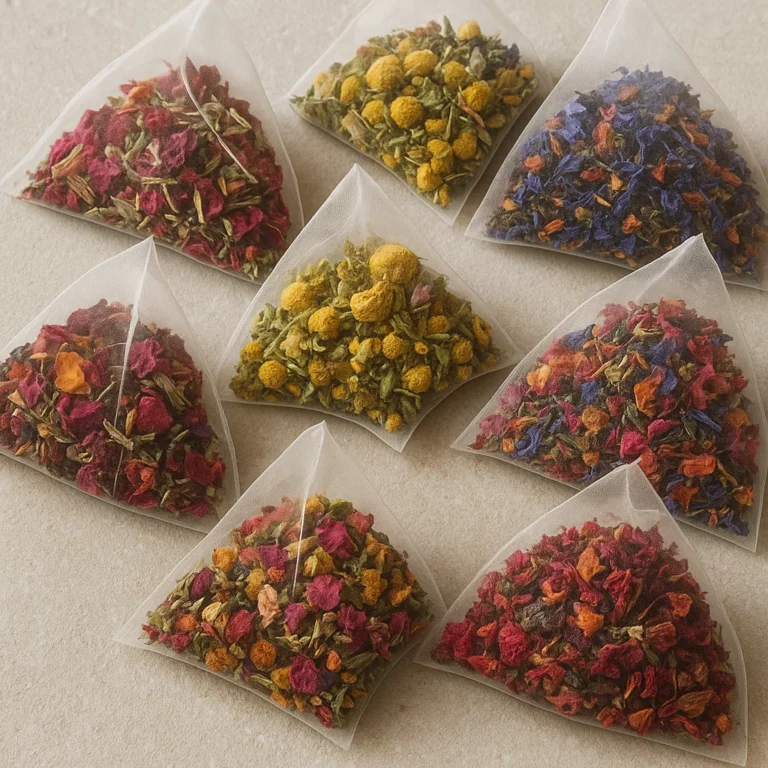
Pyramid sachets versus flat tea bags
| Feature | Flat tea bag | Pyramid sachet |
|---|---|---|
| Shape | Compact and easy to pack | Roomier, often mesh-like |
| Best use | Everyday convenience | Larger leaves and visible inclusions may have more space |
| Brewing | Convenient in a mug | Can allow more leaf expansion, depending on fill |
| What to check | Fiber and sealing materials | Mesh material and whether it contains plastic |
| Quality signal? | No, not by itself | No, not by itself |
A pyramid bag may provide more room, but tea quality depends on the leaf, blend, freshness, and brewing—not bag geometry alone.
Compostable, plastic-free, and recyclable tea bags
Claims such as “compostable,” “biodegradable,” and “plastic-free” are not interchangeable. Look for clear material details from the maker and check whether the product is accepted by your local composting or recycling system. The Federal Trade Commission’s Green Guides explain how environmental marketing claims should be substantiated in the United States.
Our practical checklist:
- Check the brand’s FAQ for the bag’s full material composition.
- Ask whether the bag, string, tag, and seal use different materials.
- Look for disposal instructions specific to the product.
- If composting is not confirmed, separate the tea leaves from the bag when practical.
How to assess leaf quality and freshness
Before buying, look for:
- A clear production or best-before date where available.
- Protective packaging that limits air, moisture, light, and strong odors.
- Aroma that seems fresh and recognizable, not dusty or stale.
- A balanced brewed cup with a distinct tea base and coherent flavor.
- Ingredient detail sufficient to tell what you’re drinking.
A sampler can make comparison easier. A competing tea-bag guide describes variety boxes as a way to “transform your daily tea ritual into a special moment” and emphasizes discovering favorites without committing to one large quantity. That’s a sensible use for samplers—though variety is less useful if you already know exactly what you love.
🍰 Pairing Gourmet Tea Blends with Food
Pair by balancing intensity. A delicate white tea doesn’t need a spicy curry as its tasting partner; a smoky black tea can happily take on stronger flavors.
| Tea profile | Food pairing ideas | Why it works |
|---|---|---|
| Earl Grey and lavender | Scones, lemon cake, shortbread | Citrus and floral notes echo bright baked flavors |
| Jasmine green and pear | Fresh fruit, mild cheese, rice crackers | Light pairings keep the aroma in focus |
| Masala chai | Oatmeal, spice cake, buttery pastry | Warm spices match rich, comforting foods |
| Chocolate mint black tea | Dark chocolate, biscotti | Cocoa and mint reinforce dessert notes |
| Hibiscus berry | Fruit, yogurt, lightly sweet pastries | Tart tea balances creamy or sweet foods |
| Smoky lapsang souchong | Aged cheese, roasted vegetables | Strong savory flavors meet the tea’s smoke |
| Rooibos vanilla | Almond biscuits, banana bread | Rounded sweetness suits mellow baked goods |
| Lemon ginger herbal tea | Ginger biscuits, simple toast | Citrus and spice complement rather than compete |
Tea-taster trick: take a sip before the food, then after. If the tea disappears completely, the pairing may be too intense; if the food tastes flat, try a more robust blend.
🎁 Tea Gifts, Samplers, and Tasting Sets
A sampler is a good gift when you know someone likes tea but don’t yet know whether they’re a rose-petal romantic or a smoke-and-spice enthusiast. Choose an assortment that clearly identifies each flavor and includes a range of tea types.
| Gift style | Good for | Potential drawback |
|---|---|---|
| Mixed tea sampler | Curious drinkers and shared offices | Some flavors may go untouched |
| Single-style collection | Fans of green tea, chai, or Earl Grey | Less variety |
| Caffeine-free herbal set | Evening drinkers and caffeine avoiders | Verify that every blend is actually caffeine-free |
| Seasonal or dessert-inspired box | Adventurous palates | Some flavor profiles can be highly polarizing |
| Individually wrapped bags | Travel, work, and gifting | More packaging to consider |
The competitor summary highlights samplers from Harney & Sons, Twings, and Taylors of Harogate, including assortments intended to cover classic black, green, herbal, and chai styles. It also notes the obvious trade-off: many flavors, but fewer bags of any single favorite. Check current assortment contents on the brands’ sites before purchasing, since boxes can change.
🏷️ Notable Gourmet Tea Brands and Blend Collections
These brands give you different routes into flavored and specialty tea. We’re not claiming every collection has the same ingredients or quality; product ranges and recipes change, so check the individual listing.
| Brand | Useful starting point | What to compare |
|---|---|---|
| The Tea Spot | Gourmet teas and flavored teas | Blend variety, tea base, and specific ingredient details |
| Harney & Sons | Tea collections | Classic flavored black teas, sachets, and sampler options |
| Twings | Tea collections | Familiar black teas, herbal infusions, and everyday assortments |
| Taylors of Harogate | Tea and infusions | Traditional blends and variety packs |
| Numi Organic Tea | Tea collections | Organic tea and herbal styles |
| Traditional Medicinals | Tea collections | Herbal blends and ingredient-specific offerings |
| Pukka | Tea collection | Herbal and spice-forward blends |
| Celestial Seasonings | Tea collections | Herbal, fruit-forward, and caffeine-free options |
What about reviews? Retailer reviews can reveal useful patterns—such as “too floral,” “great iced,” or “not strong enough”—but they are personal reports, not controlled taste tests. The competitor summaries supplied for sampler products do not include verified star ratings or numerical review scores. We won’t invent them. Instead, use written reviews to spot repeated comments, then confirm ingredients and brewing guidance with the brand.
For more detailed brand coverage, browse Tea Brand Spotlights and Tea Brand Guides.
💡 Storage Tips for Keeping Tea Fresh
Tea is an aroma sponge. Store it next to coffee, spices, or a bag of onions and it may pick up more personality than you asked for.
- Keep tea in a cool, dry, dark place.
- Use the original sealed packaging or an airtight, food-safe container.
- Keep it away from direct sunlight, heat, moisture, and strong odors.
- Avoid repeatedly leaving the tin open in a humid kitchen.
- Store flavored and unflavored teas separately if you want to keep aromas distinct.
- Follow the brand’s storage instructions and use the tea while its aroma is still lively.
The UK Tea & Infusions Association provides general tea information; for specific product storage, the maker’s label is your best guide.