Support our educational content for free when you purchase through links on our site. Learn more
12 Curated Tea Subscription Boxes for Conoisseurs 🍃

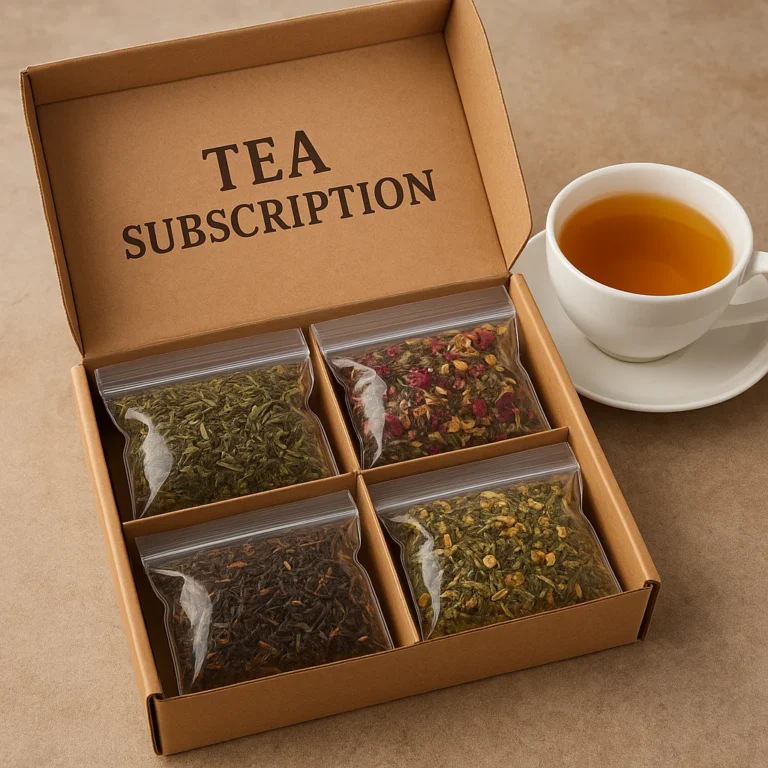
The best curated tea subscription boxes for conoisseurs pair distinctive teas with enough origin and brewing detail to help you taste what makes them special. For guided study, explore Tea Drunk’s Educational Tea Club; for self-directed discoveries, investigate specialist sellers such as White2Tea and Yunnan Sourcing.
We learned the value of good tasting notes the hard way: one tea we first dismissed as flat opened up when we followed the seller’s shorter-step instructions. That’s the pleasure of a thoughtfully curated box: not just another parcel, but a small experiment waiting in your teapot.
Key Takeaways
- Choose for your goal: guided learning, rare-tea exploration, regional discovery, or everyday variety.
- Look beyond “premium”: origin, harvest, processing, freshness, and clear brewing advice tell you more.
- Match the format to your tea habits: monthly boxes suit regular drinkers; slower delivery or sample sets may fit a fuller cupboard.
- Check the fine print: confirm current contents, shipping regions, delivery cadence, and pause or cancellation rules.
- Compare real options: Tea Drunk | White2Tea | Yunnan Sourcing | Tea Runners | Global Tea Hut
Table of Contents
- ⚡️ Quick Tips and Facts
- 🍃 Curated Tea Subscription Boxes: What They Are and Who They’re For
- How a Specialty Tea Club Differs From a Standard Tea-of-the-Month Box
- Who Gets the Most From a Curated Tea Subscription?
- 🫖 A Brief History of Tea Clubs and Monthly Tea Deliveries
- 🌿 What Conoisseurs Should Look for in a Tea Subscription
- Tea Origin, Harvest, Cultivar, and Processing Details
- Loose-Leaf Quality, Freshness, and Packaging
- Tasting Notes, Brewing Guides, and Expert Curation
- Ethical Sourcing, Organic Tea, and Sustainability
- 🏆 12 Curated Tea Subscription Boxes Worth Exploring
- 1. Global Tea Hut
- 2. White2Tea
- 3. Crimson Lotus Tea
- 4. Yunnan Sourcing
- 5. Verdant Tea
- 6. Path of Cha
- 7. Tea Runners
- 8. Atlas Tea Club
- 9. Sips by
- 10. Art of Tea
- 11. Plum Deluxe
- 12. Tea Sparrow
- 📊 Tea Subscription Comparison: Styles, Formats, and Best Fits
- 🎯 How to Choose the Best Tea Box for Your Tasting Preferences
- Single-Origin Tea Versus Blended Tea
- Chinese, Japanese, Indian, Taiwanese, and Other Tea Traditions
- Green, Black, White, Oolong, Pu-erh, and Herbal Tea
- Beginer-Friendly Samplers or Deep-Cut Conoisseur Picks?
- 📦 Subscription Formats, Delivery Schedules, and Membership Details
- Monthly, Quarterly, and Flexible Tea Deliveries
- Loose Leaf, Tea Bags, Tasting Sets, and Teaware
- Shipping, Pausing, Skipping, and Cancellation Policies
- 🎁 Tea Subscription Gifts for Serious Tea Drinkers
- How to Choose a Gift Without Knowing Their Favorite Tea
- Gift Memberships, Notes, and Delivery Timing
- 💰 Value, Freshness, and What Your Subscription Includes
- 🧑 🍳 How to Taste and Brew Subscription Teas Like a Conoisseur
- Water Temperature, Leaf-to-Water Ratio, and Step Time
- Gongfu Brewing, Western Brewing, and Cold Brewing
- Keeping a Tea Tasting Journal
- ✅ Quick Tips for Getting More From Every Tea Shipment
- ❌ Common Tea Subscription Mistakes to Avoid
- 🔎 How We Assess Curated Tea Clubs
- 🧭 Recommended Links
- ❓ FAQ
- Are curated tea subscriptions worth it for conoisseurs?
- Which tea subscription is best for rare or single-origin teas?
- Can I find a tea club that focuses one country or tea type?
- Do tea subscriptions accommodate caffeine preferences or allergies?
- How fresh is tea delivered by subscription?
- Can I pause, skip, or cancel a tea subscription?
- What makes a tea subscription a good gift?
- 📚 Reference Links
- 🏁 Conclusion
⚡️ Quick Tips and Facts
A curated tea subscription can be a tasting flight, a guided tea course, or simply a monthly parcel of good leaves. For conoisseurs, the best box is the one that explains what’s in the cup: origin, harvest, cultivar, processing, and sensible brewing guidance—not just a pretty tin.
If you’re still deciding what styles you enjoy, start with our guide to what are the top 10 best kind of tea?. Then use this shortlist to compare tea clubs by depth, discovery, and flexibility.
| Quick question | What to look for |
|---|---|
| Best for structured learning | Tea Drunk’s Educational Tea Club, with themed studies and guided tastings |
| Best for adventurous Chinese tea exploration | White2Tea or Yunnan Sourcing |
| Best for a guided tasting community | Global Tea Hut |
| Best for preference-led discovery | Sips by |
| Best for a choice of subscription formats | Tea Runners |
| Most important conoisseur check | Look for named origin, harvest or vintage, processing, and tasting notes |
| Before subscribing | Confirm shipping region, delivery cadence, pause/cancel rules, and whether the selection is loose leaf |
Our tasting-room rule: a label that says only “green tea” is a missed opportunity. A label that names a region, season, cultivar, or maker gives you a starting point for tasting—and a reason to get curious. 🍃
🍃 Curated Tea Subscription Boxes: What They Are and Who They’re For
A curated tea subscription is a recurring selection chosen by a tea company, educator, or membership program. The contents might include single-origin loose-leaf teas, blends, tasting samples, brewing notes, teaware, or live instruction. The word curated can mean very different things: one club may hand-pick rare teas around a learning theme; another may send a rotating assortment from its regular catalog.
That distinction matters if you already know your way around a gaiwan. You may want a focused comparison of two harvests, not another box of familiar breakfast blends. For broader brand discovery, browse our Tea Brand Spotlights and Tea Brand Guides.
How a Specialty Tea Club Differs From a Standard Tea-of-the-Month Box
| Feature | Standard tea-of-the-month box | Conoisseur-focused tea club |
|---|---|---|
| Main aim | Variety and convenience | Deper tasting, education, or rare-tea discovery |
| Typical range | Blends, flavored teas, tea bags, or mixed styles | Often loose-leaf, single-origin, vintage, or carefully selected teas |
| Information | Basic ingredients and steeping directions | May include origin, cultivar, harvest, processing, maker, and tasting notes |
| Personalization | Sometimes flavor or caffeine preferences | May be organized by tea style, region, skill level, or study theme |
| Best suited to | Curious drinkers and casual daily tea | Experienced drinkers who enjoy comparing details |
There’s no universal rule that a premium club must send rare tea. Some excellent subscriptions focus on accessibility and variety; others are closer to a guided seminar. Judge the actual selection and supporting information, not the velvet-ribbon fantasy.
Who Gets the Most From a Curated Tea Subscription?
You’ll probably enjoy one if you:
- Like trying unfamiliar regions, cultivars, or processing styles.
- Keep tasting notes—or are willing to start.
- Want help comparing teas rather than just collecting them.
- Prefer a recurring discovery ritual to browsing a large catalog.
- Appreciate educational material, tasting events, or a community of fellow tea enthusiasts.
A subscription may be less useful if your cupboard already contains more tea than you can drink while it’s fresh, or if you only want one precise tea every month. In that case, buying a small sample directly from a specialist can be a better fit.
🫖 A Brief History of Tea Clubs and Monthly Tea Deliveries

Tea clubs borrow an old idea—sharing tea as a social and educational practice—and give it a modern delivery schedule. Today’s offerings range from a straightforward recurring shipment to online memberships with guided tastings, recordings, and study materials.
The newer educational model is especially appealing to experienced drinkers: instead of treating each shipment as a surprise parcel, it gives you a framework for comparison. Tea Drunk’s Educational Tea Club, for example, describes a program built around terroir, cultivar, crafting, vintage, and sensory qualities. Its page says the aim is “not simply to receive something new, but to compare deliberately.” That’s a useful distinction: novelty is fun; deliberate comparison is how your palate gets sharper.
🌿 What Conoisseurs Should Look for in a Tea Subscription
We evaluate a tea club the way we evaluate a tasting flight: the tea itself matters, but so does the context. A beautiful leaf can be hard to appreciate if its identity and brewing needs are a mystery.
Tea Origin, Harvest, Cultivar, and Processing Details
Look for as much specificity as the seller can responsibly provide:
- Origin: country, region, mountain, garden, or producer.
- Harvest: season or year, especially for teas whose character changes with age.
- Cultivar: the tea plant variety, when known and relevant.
- Processing: oxidation, roasting, rolling, steaming, aging, or other craft choices.
- Maker or source: producer, farm, or sourcing relationship, where available.
Not every tea will have every detail. Blends may combine origins, and some supply chains make farm-level tracing difficult. Still, a specialist should be able to explain what it knows—and distinguish a verified fact from a tasting impression.
For a grounding in tea categories and how processing shapes them, the International Tea Committee provides industry information, while the Tea Association of the U.S.A. offers consumer-facing tea resources.
Loose-Leaf Quality, Freshness, and Packaging
A conoisseur subscription should explain how it protects tea from air, light, moisture, heat, and strong odors. Packaging varies, but sealed, food-safe pouches or tins are generally more reassuring than thin, unsealed sachets for delicate loose leaf.
Ask whether the tea is packed for the subscription, how long it is intended to stay fresh, and whether the seller provides a harvest or packing date. Avoid assuming that “vacuum sealed,” “fresh,” or “premium” means the same thing across companies.
Store unopened tea in a cool, dry place away from sunlight and kitchen odors. Once opened, close the pouch carefully. Green tea and fragrant teas can be especially vulnerable to losing their most delicate aromas over time.
Tasting Notes, Brewing Guides, and Expert Curation
Good tasting notes help you notice—not dictate—what a tea can offer. Look for notes that describe aroma, texture, flavor, finish, and suggested brewing approaches. A useful guide might explain that a tea tolerates several short infusions, or that a lighter steep brings out florals while a hotter one emphasizes roast.
Be wary of tasting notes that read like a dessert menu but offer no practical brewing help. “Stone fruit and honey” is charming; leaf quantity, water temperature, steep time, and re-steping advice make it useful.
Ethical Sourcing, Organic Tea, and Sustainability
Certification can help answer specific questions, but it is not the whole story. Organic certification addresses certain production standards; it does not automatically tell you whether a tea is fresh, carefully processed, or fairly sourced. Likewise, a small producer’s tea may be compelling even if it does not carry a particular certification.
Look for clear sourcing statements, credible certifications where applicable, and packaging choices the company can explain. The USDA Organic program describes U.S. organic standards. For broader environmental and agricultural context, see the FAO’s work on tea.
🏆 12 Curated Tea Subscription Boxes Worth Exploring
This is a shortlist of real tea brands and clubs to investigate, not a claim that every company currently offers the same subscription format in every country. Programs, selections, and shipping policies can change, so confirm the current details on each official site before joining.
1. Global Tea Hut
Global Tea Hut is known for a tea-centered community and educational approach. It may appeal if you enjoy thoughtful reading and a shared tea practice alongside the leaves. Check the current membership details for what ships, how often, and which regions are served.
- Potential fit: tea lovers who value community, stories, and mindful tasting.
- Check before joining: current contents, shipping destinations, and membership terms.
- Trade-off: a community-oriented experience may be more than you want if you’re simply seeking a steady supply of one tea.
2. White2Tea
White2Tea specializes in Chinese teas, with a strong focus on puer and other traditional styles. Its catalog is particularly useful for drinkers who want to explore pressing, aging, and regional character. Confirm whether a subscription or club option is currently available; the brand’s catalog and releases may be the better route at times.
- Potential fit: adventurous drinkers interested in puer, white tea, and Chinese tea styles.
- Check before buying: tea type, production year, storage information, and sample availability.
- Trade-off: some teas may be challenging for newcomers who prefer familiar flavor profiles.
3. Crimson Lotus Tea
Crimson Lotus Tea focuses on Chinese tea, including puer. It’s worth exploring if you want to study tea cakes, origins, and aging rather than receive a broad assortment of unrelated styles.
- Potential fit: puer enthusiasts and curious learners.
- Check before buying: current club or sampler options, tea details, and shipping terms.
- Trade-off: a specialized catalog may not suit someone looking for a balanced mix of black, green, herbal, and flavored teas.
4. Yunnan Sourcing
Yunnan Sourcing offers a wide range of Chinese teas and teaware, with substantial options for exploration. For a conoisseur, its sample offerings can be a practical alternative to a fixed subscription: you can build a focused tasting around one region or style.
- Potential fit: self-directed tasters who enjoy comparing many Chinese teas.
- Check before buying: sample sizes, harvest or production details, and shipping origin.
- Trade-off: a large catalog rewards curiosity but can feel like a rabbit hole with a gaiwan at the bottom.
5. Verdant Tea
Verdant Tea focuses on Chinese tea and producer-centered sourcing. Explore its current offerings for detailed descriptions and tasting-oriented selections.
- Potential fit: drinkers who value producer stories and expressive Chinese teas.
- Check before buying: whether a recurring tea club is available and what each delivery includes.
- Trade-off: a retailer’s recurring offers can change; verify that the format matches your expectations before committing.
6. Path of Cha
Path of Cha offers curated tea experiences and education. It may suit drinkers who want to connect tea selection with guided learning and tasting practice.
- Potential fit: tea explorers who appreciate context and structured discovery.
- Check before joining: current membership format, delivery cadence, and educational materials.
- Trade-off: verify whether the program is a recurring subscription, a class, or a one-time tasting experience.
7. Tea Runners
Tea Runners promotes tea subscriptions and gift cards. Its site says subscriptions ship free and orders ship within 24 hours Monday through Friday via USPS; check the current shipping information for terms and any exceptions. Those are convenient logistics, though a conoisseur should also investigate the actual tea specifications and selection format.
- Potential fit: subscribers who want an accessible recurring discovery box.
- Check before joining: loose-leaf options, origin detail, customization, and current selection.
- Trade-off: a convenient assortment may not offer the depth of a single-origin study club.
8. Atlas Tea Club
Atlas Tea Club frames its offering around tea discovery and origin. Review the current box details to see how much producer, region, and brewing information accompanies each selection.
- Potential fit: drinkers who enjoy exploring tea-growing regions.
- Check before joining: tea quantity, format, included information, and subscription flexibility.
- Trade-off: if you want a deep dive into one tea style, a geographic sampler may feel broad rather than specialized.
9. Sips by
Sips by is known for a preference-led tea discovery model. Its personalization can be helpful if you have clear preferences or want to explore beyond them.
- Potential fit: drinkers who want variety and preference-based recommendations.
- Check before joining: current personalization options, tea formats, and whether selections meet your loose-leaf expectations.
- Trade-off: a customized assortment is not necessarily a rare-tea or terroir-focused program.
10. Art of Tea
Art of Tea offers a broad selection of teas and blends. Check its current subscriptions or recurring delivery options if you want an approachable way to sample the brand’s range.
- Potential fit: drinkers who enjoy polished blends alongside classic tea styles.
- Check before joining: whether the current program is curated, recurring, and suited to your preferred format.
- Trade-off: a blend-forward assortment may be less compelling if your main goal is comparing single-origin teas.
11. Plum Deluxe
Plum Deluxe is known for flavored and blended teas, along with a welcoming tea-community feel. It may be a pleasant fit if your version of conoisseurship includes carefully composed blends, not only orthodox single-origin teas.
- Potential fit: fans of creative blends and approachable tasting.
- Check before joining: current membership details, caffeine options, and ingredient information.
- Trade-off: less suited to someone seeking a narrowly focused study of terroir or traditional processing.
12. Tea Sparrow
Tea Sparrow offers tea subscription and discovery options; review its current site for availability, shipping regions, and what each shipment contains.
- Potential fit: drinkers looking for variety and a guided route through different teas.
- Check before joining: current subscription status, loose-leaf formats, and selection details.
- Trade-off: verify the program is active and available where you live before planning around it.
📊 Tea Subscription Comparison: Styles, Formats, and Best Fits
The table below compares the kind of experience to investigate, not guaranteed current box contents. Subscription plans change, and some brands are better approached through sample orders or a one-time class.
| Brand or club | Best starting point | Conoisseur appeal | What to verify |
|---|---|---|---|
| Tea Drunk Educational Tea Club | Guided membership | Structured comparisons and learning materials | Current tier, cadence, event access |
| Global Tea Hut | Community-focused tea exploration | Shared practice and education | Current membership contents and shipping |
| White2Tea | Chinese tea catalog | Puer and focused tea exploration | Current subscription availability; samples |
| Crimson Lotus Tea | Puer-focused shopping | Specialized Chinese tea selection | Current club options and tea details |
| Yunnan Sourcing | Samples and self-directed tastings | Broad Chinese tea range | Sampling, shipping, production details |
| Verdant Tea | Chinese tea discovery | Producer-focused descriptions | Current recurring options |
| Tea Runners | Tea subscription | Convenient recurring discovery | Tea identity, format, personalization |
| Atlas Tea Club | Origin-led discovery | Geographic exploration | Tea details and flexibility |
| Sips by | Preference-based discovery | Personalization | Current formats and selection logic |
| Art of Tea | Broad tea range | Blends and classic styles | Current subscription contents |
| Plum Deluxe | Blends and flavored tea | Blend-focused tasting | Ingredients and caffeine choices |
| Tea Sparrow | Subscription discovery | Rotating selection | Current availability and delivery details |
What the competing descriptions tell us—and what they don’t
A Republic of Tea of the Month Club collection page advertises “Free Shipping on Orders Over $59*.” That confirms a shipping promotion appears on the page; it does not, by itself, tell us the club’s shipment contents, cadence, quantities, or tasting notes.
Likewise, Tea Runners highlights free shipping for subscriptions and gift cards, plus order fulfillment within 24 hours Monday through Friday. Useful logistics—but fulfillment speed is not a measure of tea quality. Trust a shipping promise for shipping; trust detailed tea information for evaluating the leaves.
🎯 How to Choose the Best Tea Box for Your Tasting Preferences
Before subscribing, decide what you want the box to do. Are you hoping to taste teas you’d never choose yourself, learn one style in depth, or replenish an everyday favorite? That answer narows the field faster than any “best subscription” label.
Single-Origin Tea Versus Blended Tea
| If you prefer… | Look for… | Why it may appeal |
|---|---|---|
| Teroir and production differences | Single-origin teas with detailed sourcing | Easier to compare place, harvest, and craft |
| Consistency and balance | Blends with clear ingredient lists | The maker can build a repeatable flavor profile |
| Surprises and experimentation | A mixed subscription | You may encounter styles outside your usual rotation |
| Focused study | A themed tasting set | Several teas can illustrate one idea or contrast |
Blended tea is not automatically less sophisticated. A skilled blender may balance aroma, body, and finish with real precision. The question is whether the blend’s purpose and ingredients are explained.
Chinese, Japanese, Indian, Taiwanese, and Other Tea Traditions
A region-focused box can make comparison more meaningful, but “country of origin” is only the first layer. China alone includes many traditions and tea styles; Japan, India, Taiwan, Sri Lanka, Korea, and other producing regions each have diverse local practices.
Look for a subscription that tells you enough to distinguish one tea from another. A Japanese green tea described by cultivar and steaming style, for example, gives you more to explore than a label that simply says “green.” Use our Tea Brand Guides to find more ways into specific brands and styles.
Green, Black, White, Oolong, Pu-erh, and Herbal Tea
| Tea category | What to investigate | A useful tasting question |
|---|---|---|
| Green | Steaming or pan-firing, harvest, freshness | Is the cup grassy, nuty, marine, floral, or sweet? |
| Black | Region, oxidation, leaf grade, season | Does malt, fruit, spice, or briskness lead? |
| White | Bud-to-leaf ratio, origin, processing, age | Is the texture delicate, honeyed, floral, or hay-like? |
| Oolong | Oxidation and roast level | How do aroma and texture shift across infusions? |
| Pu-erh | Raw or ripe style, origin, year, storage | What changes after a rinse and successive steps? |
| Herbal infusion | Botanical ingredients and sourcing | Which plants contribute flavor, and are blends clearly labeled? |
“Herbal tea” is often used casually for infusions made without Camellia sinensis. If you’re shopping for tisanes, explore our Herbal Tea section. For blends and flavored varieties, browse Specialty Blends.
Beginer-Friendly Samplers or Deep-Cut Conoisseur Picks?
A sampler is not a compromise. Small portions let you compare teas while keeping your cupboard—and your decision-making—under control. A focused conoisseur box, on the other hand, may better if you want a vertical tasting of harvests or a guided look at processing.
Our practical recommendation: choose a sampler when you’re exploring a broad category; choose a study set when you want to answer a specific question. “Which Japanese green teas do I enjoy?” calls for breadth. “How does cultivar affect this producer’s tea?” calls for comparison.
📦 Subscription Formats, Delivery Schedules, and Membership Details
The word “subscription” can describe a shipment, a membership, a class, or a combination. Read the details carefully, especially when a program includes live events or an online learning portal.
Monthly, Quarterly, and Flexible Tea Deliveries
Monthly shipments keep discovery regular, but they can pile up if you drink slowly. Quarterly deliveries give you more time to taste and take notes. Flexible memberships may let you choose a cadence or pause between shipments.
Tea Drunk’s Educational Tea Club lists monthly, every-two-months, and every-three-months delivery options. Its description also distinguishes an Aficionado path focused on comparative studies from a Conoisseur path featuring Tea Drunk curation. Confirm current terms on the official page before enrolling.
Loose Leaf, Tea Bags, Tasting Sets, and Teaware
Check whether your subscription includes:
- Loose-leaf tea, sachets, or a combination.
- Single-serving samples or larger daily-drinking portions.
- Brewing notes and tasting materials.
- Teaware, if advertised.
- Access to virtual or in-person tastings.
- A clear description of tea ingredients and caffeine status.
A tea bag can still contain enjoyable tea, and loose leaf does not guarantee quality. For conoisseur tasting, though, whole-leaf samples with clear labels often make comparison easier.
Shipping, Pausing, Skipping, and Cancellation Policies
Before paying, check:
- Where the company ships. International delivery can affect timing and availability.
- How often orders renew. Confirm the renewal date and the cadence you selected.
- How to pause or skip. Look for self-service account controls and deadlines.
- How cancellation works. Check whether cancellation stops future billing or also affects membership access.
- What happens to educational access. A club may link portal or event access to an active membership.
Tea Drunk’s membership information says members can pause or cancel through their account, while portal access ends when the membership is cancelled. That’s a good example of why shipment cancellation and learning access are worth checking separately.
🎁 Tea Subscription Gifts for Serious Tea Drinkers
A tea subscription makes a thoughtful gift when it matches the recipient’s habits: how they brew, what they enjoy, and how quickly they drink through a pouch. If you’re unsure, choose flexibility over a very specific tea profile.
How to Choose a Gift Without Knowing Their Favorite Tea
- Pick a gift membership or one-time sampler if available.
- Favor clear variety over a highly specialized box unless you know their interests.
- Check for caffeine preferences and botanical ingredients.
- Look for a gift note or delayed start date.
- Avoid sending large quantities of a tea they may already own.
A preference-based service such as Sips by may suit someone who enjoys trying different teas. For an experienced drinker who likes learning, a guided program such as Tea Drunk’s Educational Tea Club may feel more distinctive.
Gift Memberships, Notes, and Delivery Timing
Confirm whether a gift subscription renews automatically. Check the first shipment date, shipping region, recipient email requirements, and whether the recipient can change preferences.
A live tasting can also be a lovely gift—but only if the recipient can attend or access a recording. Tea Drunk’s membership description includes guided tastings and recorded materials; check the current offer for how access works.
💰 Value, Freshness, and What Your Subscription Includes
With tea clubs, value is more than leaf weight. A small tasting set can be excellent value if it contains distinctive teas and enough information to teach you something; a larger box can feel disappointing if its contents are vague or repetitive.
Use this checklist:
| Value factor | Ask yourself |
|---|---|
| Tea identity | Are origin, type, and ingredients clearly named? |
| Quantity | Is there enough for a proper tasting or multiple infusions? |
| Curation | Is there a reason these teas belong together? |
| Learning | Are brewing notes, tasting prompts, or events included? |
| Freshness | Is packaging protective, and are harvest or packing details supplied? |
| Flexibility | Can you pause, skip, or cancel easily? |
| Shipping | Are delivery regions, timelines, and conditions clear? |
Compare the full experience rather than judging by the number of packets. Tea Drunk’s program, for instance, describes education, live guided tastings, a member portal, recordings, notes, quizzes, and community access alongside tea. A simpler delivery club may offer better value for someone who wants leaves without the classroom. Different formats solve different problems.
🧑 🍳 How to Taste and Brew Subscription Teas Like a Conoisseur
A subscription box becomes much more rewarding when you treat it like a small experiment. Brew the tea as recommended first, then adjust one variable at a time. That way, you learn what changed instead of blaming the leaves for your kettle’s enthusiasm.
Water Temperature, Leaf-to-Water Ratio, and Step Time
A repeatable tasting method
- Read the tea card. Note the recommended water temperature, leaf amount, and steep time.
- Use fresh water. Water quality affects what you taste; avoid water with a strong smell or flavor.
- Measure the leaves. Use a scale if available, or follow the seller’s portion guidance.
- Start with the recommended brew. Don’t improvise before you have a baseline.
- Taste while warm, not scalding hot. Let the cup cool enough to notice aroma and texture.
- Record the result. Write down what you smell, taste, and feel in the finish.
- Change one variable. Adjust temperature, time, or leaf amount—one at a time—to see its effect.
The UK Tea & Infusions Association offers general tea information, but for a specific tea, the producer’s own directions should take priority. A delicate green tea and a roasted olong may not want the same treatment.
Gongfu Brewing, Western Brewing, and Cold Brewing
| Method | What it emphasizes | Useful for |
|---|---|---|
| Gongfu-style | Multiple short infusions and changing flavor | Oolong, puer, and teas with evolving infusions |
| Western-style | A longer infusion in a larger vessel | Everyday tasting and simple comparison |
| Cold brewing | Slow extraction in cool water | Refreshing, mellow infusions; follow food-safe handling practices |
For a fair comparison, brew two teas using the same method and similar leaf-to-water ratios. Then try each tea using its recommended approach. You’ll see both how the leaves compare and how the brewing method changes the cup.
Keeping a Tea Tasting Journal
Keep it simple. Record:
- Tea name, origin, harvest or vintage if provided.
- Leaf appearance and dry-leaf aroma.
- Water temperature, leaf amount, and steep time.
- Aroma, flavor, texture, and finish.
- Number of infusions and how the flavor changed.
- Whether you’d buy it again—and why.
The most useful note is often not “delicious,” but “floral at the first steep; more mineral and savory when brewed cooler.” Specific observations help you find your preferences and compare future shipments.
✅ Quick Tips for Getting More From Every Tea Shipment
- Taste each tea once exactly as recommended before experimenting.
- Keep samples sealed until you’re ready to brew them.
- Compare two teas side by side when they share a style or region.
- Use the same water and vessel for a fair tasting.
- Save packaging or photograph the label so you can find the tea again.
- Re-step leaves if the seller recommends it; don’t assume the first infusion tells the whole story.
- Use a tasting journal to track what you like.
- If a shipment includes a live event, check the schedule before the tea arrives.
For background on tea and wellness claims, consult reliable health sources and our Health Benefits of Tea category. Tea can be part of an enjoyable routine, but health claims should be judged separately from flavor and sourcing claims.
❌ Common Tea Subscription Mistakes to Avoid
- Choosing by packaging alone. Attractive tins don’t tell you about origin or freshness.
- Assuming every subscription is truly curated. Check how selections are chosen and described.
- Ignoring the renewal policy. A gift plan and an automatically renewing membership are not the same thing.
- Over-ordering. Match delivery frequency to your actual tea-drinking pace.
- Brewing every tea the same way. Different styles may need different temperatures and steep times.
- Confusing “premium” with “rare.” A well-made everyday tea can be more enjoyable than a rare tea poorly stored or badly brewed.
- Treating an online tasting as a shipment add-on. Confirm whether the event is included, live, recorded, or tied to an active membership.
- Taking promotional shipping language as proof of value. Free or fast delivery is useful, but it doesn’t establish tea quality.
One more pitfall: judging a tea from the first sip of a rushed brew. We once tasted an olong that seemed flat at the first steep, then opened into a bright, layered cup after we followed the seller’s shorter infusion guidance. The leaf wasn’t hiding a secret; were simply asking the wrong question.
🔎 How We Assess Curated Tea Clubs
At Tea Brands™, our tasting perspective puts the tea, the information, and the experience on equal footing. We consider:
- Tea transparency: Are origin, style, ingredients, and relevant production details shared?
- Curation logic: Do the selections form a meaningful assortment or study?
- Brewing support: Are instructions specific enough to help you taste well?
- Freshness and packaging: Does the brand explain how it protects the tea?
- Learning value: Are notes, classes, tastings, or comparison prompts included?
- Practical flexibility: Can members understand shipping, cadence, pausing, and cancellation?
- Fit: Does the club serve its stated audience, from blend fans to puer specialists?
We also separate verified details from interpretation. A company’s own page is the best source for its current membership terms; independent health or agricultural sources are better for general factual claims. Customer reviews can reveal recurring experiences, but they are individual reports—not controlled quality tests. Read recent reviews on the brand’s site and independent retailer pages, and look for patterns rather than one dramatic cup of praise or complaint.
The first video embedded above, “BRUU TEA, MONTHLY SUBSCRIPTION BOX. UNBOXING.” by JustJohnnyCreations, may help you visualize what a sample-style tea delivery can look like. The creator describes 14-gram packets as taster samples; it’s an informal unboxing, not a technical assessment of tea quality or a guarantee of current BRUU contents.
🧭 Recommended Links
Official tea brands and clubs
- Tea Drunk Educational Tea Club: Tea Drunk Official
- Global Tea Hut: Global Tea Hut Official
- White2Tea: White2Tea Official
- Crimson Lotus Tea: Crimson Lotus Tea Official
- Yunnan Sourcing: Yunnan Sourcing Official
- Verdant Tea: Verdant Tea Official
- Path of Cha: Path of Cha Official
- Tea Runners: Tea Runners Official
- Atlas Tea Club: Atlas Tea Club Official
- Sips by: Sips by Official
- Art of Tea: Art of Tea Official
- Plum Deluxe: Plum Deluxe Official
- Tea Sparrow: Tea Sparrow Official
- The Republic of Tea: Tea of the Month Club collection
Tea reading and education
- The Tea Book by Linda Gaylard on Amazon
- The Story of Tea: A Cultural History and Drinking Guide by Mary Lou Heiss and Robert J. Heiss on Amazon
- The Tea Enthusiast’s Handbook by Mary Lou Heiss and Robert J. Heiss on Amazon
- Tea Drunk Educational Tea Club
- Tea Drunk guided tea-club tastings
❓ FAQ

What are the best curated tea subscription boxes for tea conoisseurs?
The best choice depends on what you want to learn or taste. For structured study, investigate Tea Drunk’s Educational Tea Club, which describes themed tea study, guided tastings, and learning materials. For Chinese tea exploration, browse White2Tea, Yunnan Sourcing, and Crimson Lotus Tea. For preference-led variety, look at Sips by and Tea Runners.
Before choosing, check current availability and compare tea detail, tasting support, format, and cancellation terms. A subscription may be excellent for discovery without being the best source for rare single-origin teas.
Read more about “🍵 15 Luxury Tea Brands for Conoisseurs (2026)”
How do tea subscription boxes select their premium loose-leaf teas?
Selection methods differ. Some clubs rotate their own catalog; others build a shipment around a region, season, producer, or educational theme. A true study-oriented club should explain the reason for the selection and give enough details to guide your tasting.
Look for named origins, harvest or vintage information where relevant, producer or sourcing details, and a clear description of how the teas relate to one another. If the company does not disclose its selection process, ask what “curated” means for that specific program.
Read more about “15 Best Tea Subscription Boxes to Sip and Savor 🍵”
Are curated tea subscriptions worth it for experienced tea drinkers?
They can be, especially if you value discovery, guided comparisons, or learning. A club can introduce teas you might not have selected from a large catalog and provide tasting notes or events that make each shipment more useful.
They may not be worthwhile if you already know exactly what you like, have a backlog of tea, or prefer choosing every harvest yourself. In that case, specialist sample orders can offer more control. Compare the complete experience—not just the amount of tea—with what you actually want from a membership.
Which tea subscription boxes offer rare and single-origin teas?
Start by exploring specialist sellers such as White2Tea, Yunnan Sourcing, Crimson Lotus Tea, and Verdant Tea. Their catalogs can support focused exploration of Chinese tea, though current subscriptions and sample formats should be confirmed directly.
For rare or single-origin tea, transparent sourcing matters more than the word “rare.” Look for specific origin, production details, vintage when relevant, and an explanation of what makes the tea distinctive.
Read more about “🍵 How to Choose the Best Tea Bag Brand for Your Taste (2026)”
What makes an educational tea membership different from a subscription box?
A conventional subscription mainly delivers tea on a recurring schedule. An educational membership may also include a themed curriculum, guided tastings, notes, a portal, recordings, or a community.
Tea Drunk’s Educational Tea Club describes comparative study and guided tasting as part of its experience. The page also says members can choose monthly, every-two-months, or every-three-months delivery. Check the current terms for tier details and access rules.
Can I try a guided tea club before joining?
Some programs offer one-time tastings or events. Tea Drunk lists upcoming Tea Club tastings, which may let you experience a guided session without first taking out a recurring membership. Confirm the event date, format, what tea is included, and any access requirements on the listing.
How should I judge customer reviews of tea subscriptions?
Read recent reviews and look for repeated, specific patterns: late deliveries, unclear billing, damaged packaging, helpful support, or consistently detailed tea information. Treat personal taste comments as subjective. One customer may love a smoky profile while another finds it too intense.
Also separate product feedback from shipping feedback. A review praising fast delivery tells you something about logistics, not necessarily leaf quality. When possible, compare reviews across the company’s site and independent retailers, then confirm current policies directly with the brand.
📚 Reference Links
- Tea Drunk Educational Tea Club
- Tea Drunk Tea Club Tastings
- The Republic of Tea of the Month Club collection
- Tea Runners
- Global Tea Hut
- White2Tea
- Crimson Lotus Tea
- Yunnan Sourcing
- Verdant Tea
- Path of Cha
- Atlas Tea Club
- Sips by
- Art of Tea
- Plum Deluxe
- Tea Sparrow
- Tea Association of the U.S.A.
- UK Tea & Infusions Association
- USDA National Organic Program
- Food and Agriculture Organization: Tea
- Tea Drunk: Educational Tea Club Subscription Box | Luxury Membership